
Why Do Mice Keep Coming Back? 7 Reasons Your Traps Aren’t Working
If you are wondering why mice keep coming back, you are not alone. You set traps. You caught a few. Things went quiet for a week or two. Then you heard it again: that light scratching in the wall, the fresh droppings by the stove.
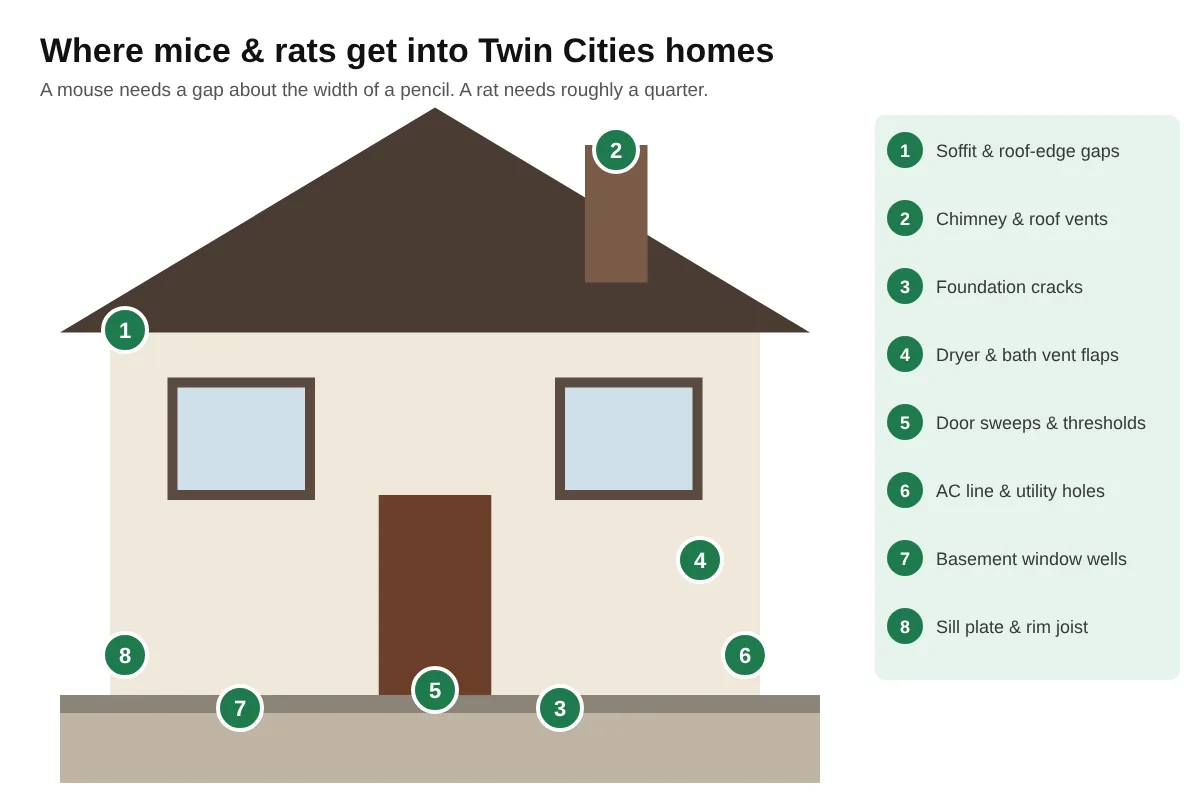
If mice keep coming back, it doesn’t mean you’re doing something wrong. It usually means one of a few common problems is still there. Here are the seven most common in Minneapolis-area homes, and what to do about each.
1. The way in is still open
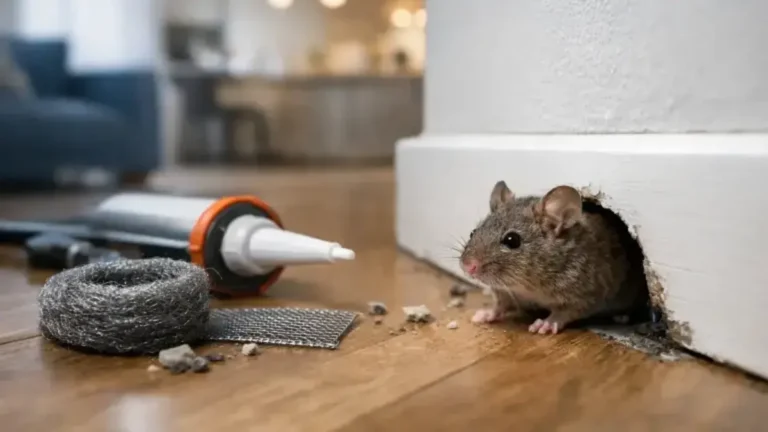
This is the big one. Traps catch the mice that are already inside. They do nothing to stop the next ones from walking in through the same gap.
Mice can squeeze through a hole about the size of a dime. In older Twin Cities homes, there are often dozens of small gaps at the sill plate, around pipes, and at the garage door.
Fix: Find and seal the entry points with steel mesh, hardware cloth, and rodent-proof sealant. See our rodent exclusion page.
2. The traps are in the wrong places
Mice don’t wander across the middle of the room. They run along walls, behind appliances, and through hidden paths. A trap in the open usually gets ignored.
Fix: Place traps along walls, with the trigger end facing the wall, where you see droppings or rub marks. Put them behind the stove and fridge, under the sink, and along the basement walls.
3. Not enough traps
One or two traps for a house with a mouse problem isn’t enough. Mice breed fast, and a small group can become dozens in a season.
Fix: Use more traps than you think you need, spaced a few feet apart in active areas. Check them daily.
4. There’s an easy food source
If mice have a steady supply of bird seed in the garage, dog food in an open bag, or crumbs under the toaster, they’ll keep coming back for it.
Fix: Store food in sealed containers, especially in the garage and pantry, and keep counters and floors clean.
5. The neighbors have mice too
In neighborhoods with homes close together, like many parts of Minneapolis, Richfield, and St. Paul, mice can move between houses and garages. Duplexes and apartments share walls, so mice travel between units.
Fix: Sealing your own home is the most reliable defense. In multi-unit buildings, ask the landlord or HOA about treating the whole building.
6. You’re relying on gadgets
Plug-in ultrasonic devices, peppermint oil, and dryer sheets are popular, but there isn’t good evidence they keep mice away for long. Mice may avoid them briefly, then get used to them.
Fix: Stick with what works: trapping plus sealing.
7. They’re nesting where you can’t see
If mice are nesting inside walls, ceilings, or the attic, you may only be catching the ones that wander out. The nest keeps producing more.
Fix: A professional can trace the activity, find the nest areas, and trap at the access points. See mice and rats in walls and attic rodent removal.
When to call for help
It’s time to bring in a pro if:
- You’ve been catching mice for more than a couple of weeks
- You hear noises in the walls or ceiling
- You find droppings in several rooms
- Mice come back every fall
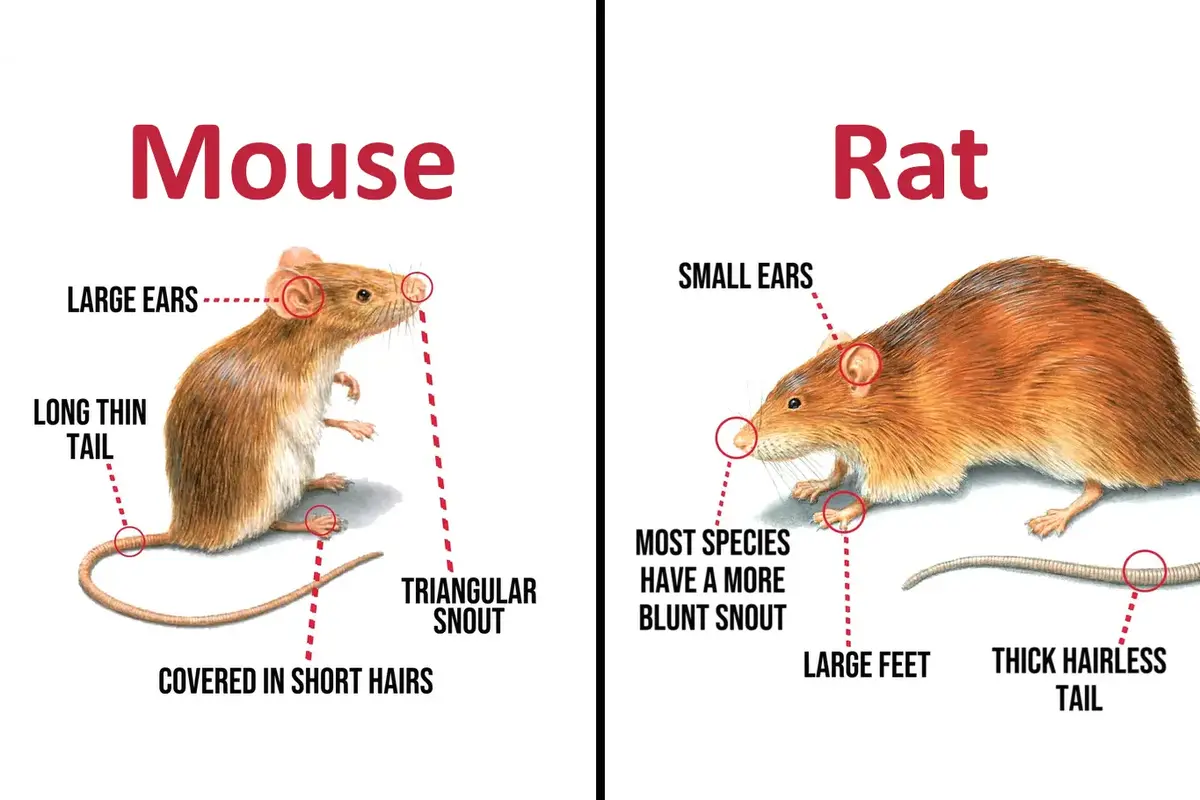
- You think it might be rats
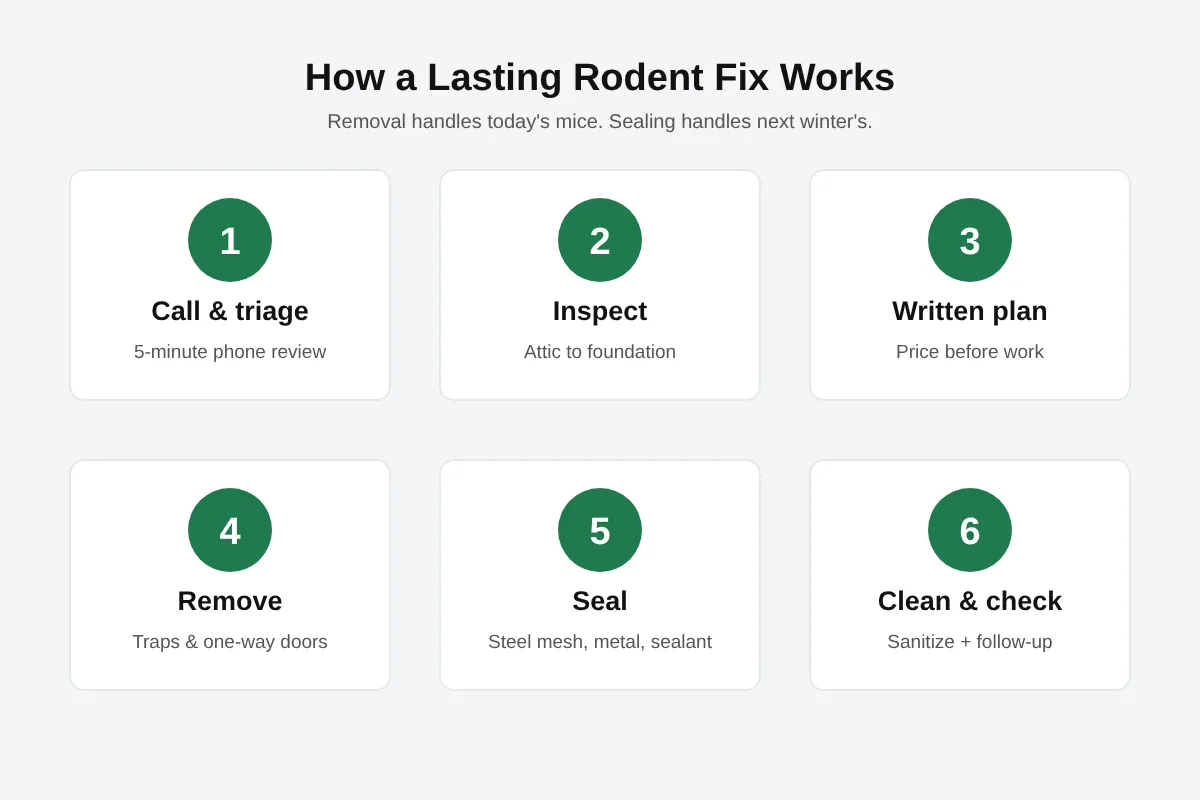
A local provider can inspect the whole house, remove the mice that are inside, and seal the gaps so they can’t come back. Learn more on our mouse exterminator page.
Why Mice Keep Coming Back to the Same House Every Fall
Mice leave scent trails and urine marks along their routes. Even after the original mice are gone, those trails guide new mice to the same gaps the following fall. That is why sealing and cleaning go together: closing the entry point removes the door, and cleaning removes the signposts that lead to it.
- Seal gaps of about 1/4 inch or larger with copper mesh and sealant
- Clean and disinfect runways and nesting areas after trapping
- Store food, birdseed and pet food in hard containers
- Check again each September before the first freeze
The university extension guide to controlling house mice explains the biology behind this. If the cycle keeps repeating, see our mouse exterminator page.
Why Mice Keep Coming Back: Setting Traps the Right Way
Even good traps fail when they are set in the wrong place or the wrong way. Mice run along walls and edges, so traps placed in the middle of a floor or counter are easy to avoid. Set snap traps perpendicular to the wall, with the trigger end facing the wall, in the spots where you have found droppings or rub marks.

Bait and placement tips
- Use a small amount of peanut butter, hazelnut spread or nesting material such as cotton
- Place traps every few feet along active runways, not one trap per room
- Set traps unset for a night or two so wary mice get used to them
- Check traps daily and wear gloves when handling them
- Keep traps out of reach of children and pets, or use tamper-resistant boxes
Glue boards and poison are not good choices in most homes. Glue boards are inhumane and can trap pets, and poisoned mice often die inside walls and cause odor problems.
Why Mice Keep Coming Back After a Professional Visit
If mice return after a professional job, it usually means a new entry point opened or one was missed. Frost movement, new utility work, a damaged garage door seal or a gap behind siding can all let mice back in. A follow-up inspection should check the original sealing and look for new openings.
It can also mean the source is nearby. Neighboring properties, sheds, woodpiles and bird feeders can keep pressure high. Asking neighbors to address their side, and keeping your yard tidy, makes your sealing last longer.
Your call connects you with an independent local pest control provider.