
Mice and Rats in Walls in Minneapolis — Find Them, Remove Them, Seal the Gap
Scratching from mice and rats in walls Minneapolis homeowners hear at night usually has a clear explanation. That scratching behind the headboard isn’t your imagination. Rodents use wall cavities as highways between the basement and the attic. A local provider can track the route, remove the animals and close the openings they’re using.
Your call connects you with an independent local pest control provider.
- Talk to a Real Person
- Independent Local Providers
- Minneapolis & Nearby Suburbs
- Ask for a Written Plan
Why Rodents Love Your Walls
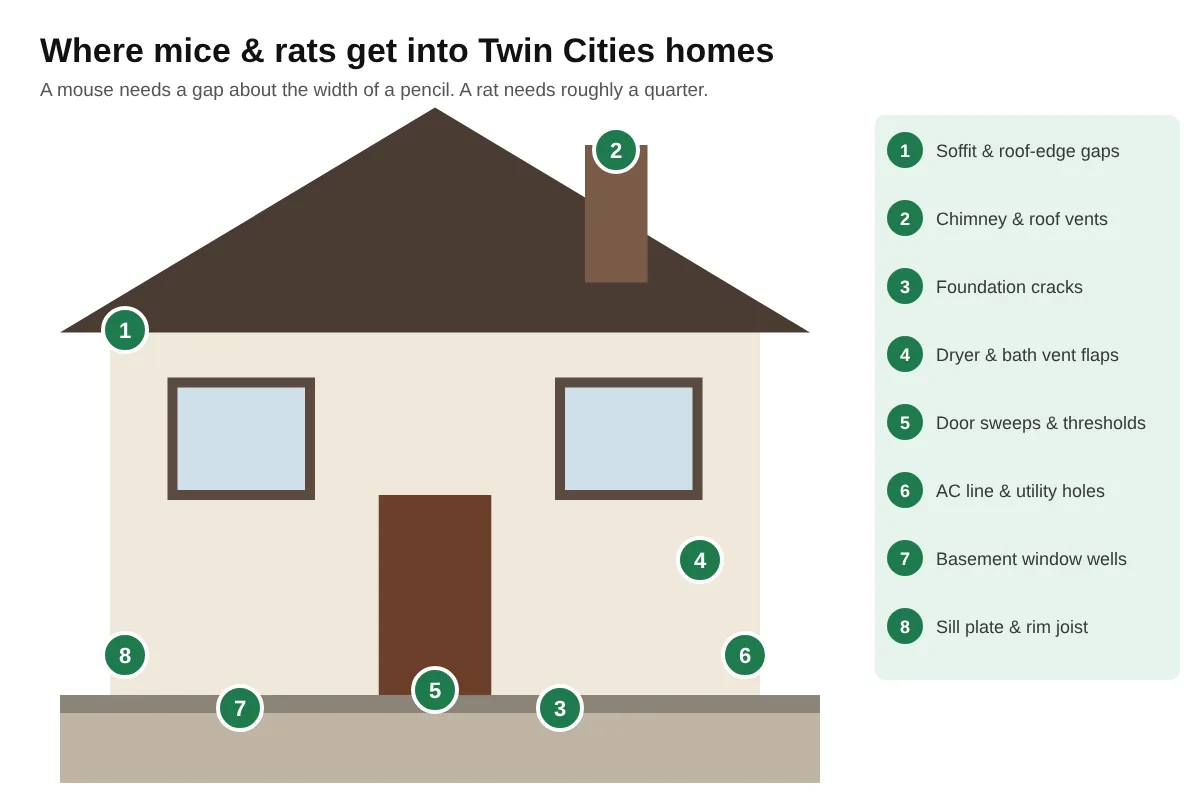
Inside a wall it’s dark, warm and protected. Wires, pipes and ducts create built-in ladders that connect every floor. In older Minneapolis homes, balloon framing leaves open channels from the basement all the way to the attic, which makes travel even easier.
Most wall activity starts somewhere low, like a gap at the sill plate or a utility penetration in the basement, and ends somewhere warm, like the attic or the space above a kitchen. The noise you hear is usually rodents traveling between the two, especially around dusk and in the middle of the night.
What the Sounds Are Telling You
| What you hear | What it usually means |
|---|---|
| Light scratching and quick scurrying | Mice traveling or nesting, often near a heat source |
| Heavier thumps, gnawing or dragging | Likely rats, especially in basement ceilings |
| Squeaking at the same spot | A nest with young nearby |
| Scratching that suddenly stops, then a smell | A rodent may have died inside the wall |
| Noise only at night | Normal rodent schedule; activity peaks after dark |
Not every noise is a rodent. Squirrels are louder and more active in the morning, and bats make a high-pitched chirping. A proper inspection tells you exactly what you’re dealing with before anyone sets a trap.
Getting Rodents Out Without Tearing Up Your Walls
Opening up drywall is rarely the first step. Droppings, rub marks and sound help track where rodents enter and leave the wall, and traps are then set at those points: in the basement, attic, behind appliances or under sinks.
- Traps at wall entry and exit points
- One-way exits on exterior holes where it makes sense
- Small, patchable access holes only when truly needed
- Sealing every gap that connects the wall to the outside
What about poison?
Poison and walls are a bad combination. A poisoned mouse heads for a quiet, enclosed space to die, which is often the very wall you’re trying to clear. The smell can last weeks and removing the body may mean cutting drywall anyway. That’s why trapping is the better choice indoors.
Old Minneapolis Homes and Wall Rodents
Many houses built in the city before the 1940s use balloon framing, where wall studs run uninterrupted from the foundation to the roof. There are no horizontal fire blocks to stop a mouse, so a gap at the basement sill plate can lead straight into a second-floor bedroom wall or the attic. Plaster walls and lath add more ledges and hollow spaces to travel through.
Remodeling can make things worse before they get better. A new bathroom fan, a kitchen renovation or a fresh cable line often leaves a new hole somewhere in the shell of the house, and rodents find those fast.
Shared walls in duplexes
Rodents move freely between units through shared walls and ceilings, so both sides often need attention.
Knee walls & half-stories
Story-and-a-half homes have hard-to-reach knee walls that make ideal nesting spaces.
Kitchen & bath plumbing walls
Pipe openings under sinks and behind dishwashers are among the most-used wall entry points.
Your call connects you with an independent local pest control provider.
How Rodents Are Cleared From Walls and Ceilings
Listen & locate
The provider maps where you hear activity and when.
Trace the route
Droppings and rub marks show where rodents enter the wall.
Your plan
Clear scope, price and timeline in writing.
Targeted trapping
Traps placed at the wall’s access points, not randomly.
Seal the source
Foundation, sill plate and utility gaps closed.
Quiet check
Follow-up visits until the noise is gone.
Mice and Rats in Walls Minneapolis Homes: Plaster, Balloon Framing and Shared Walls
Many Minneapolis houses built before the 1940s use balloon framing, where wall cavities run continuously from the basement to the attic. That creates open highways for mice and rats to travel between floors without ever crossing a room. Combine that with plaster and lath walls, which carry sound in unexpected directions, and it is easy to see why wall noises are so confusing.
Plaster and lath homes
Sound in a plaster wall can travel several feet from the animal. A provider uses droppings, rub marks and access points in the basement and attic to locate the route, then traps at the top and bottom of the cavity instead of opening the wall.
Drywall homes
In newer houses, rodents usually follow plumbing and electrical penetrations. Small, carefully placed inspection holes or access through outlets and fixtures can confirm activity without major repairs.
Condos and duplexes
Shared walls and pipe chases connect units. Coordinating with the neighbor or building manager keeps the problem from bouncing back and forth.
Fire blocking and sealing gaps where pipes enter wall cavities from the basement often stops travel between floors. The university extension guide to controlling house mice covers how mice use these hidden routes.
What the sound tells you
- Light, quick scratching at night: usually mice
- Heavier thumps low in the house: often rats
- Noise right after dark and before dawn: active runway
- Sudden silence plus odor: possible dead rodent
- Gnawing sounds: chewing on wood, wiring or pipes
Rats in Walls Minneapolis: More Questions Answered
Will the provider have to cut holes in my walls?
Usually not. Most wall infestations are handled by trapping where the cavity starts and ends, in the basement and attic, and by sealing the entry points outside. Small access holes are used only when needed to confirm activity or remove a dead rodent.
How do I know if it is mice or rats in the wall?
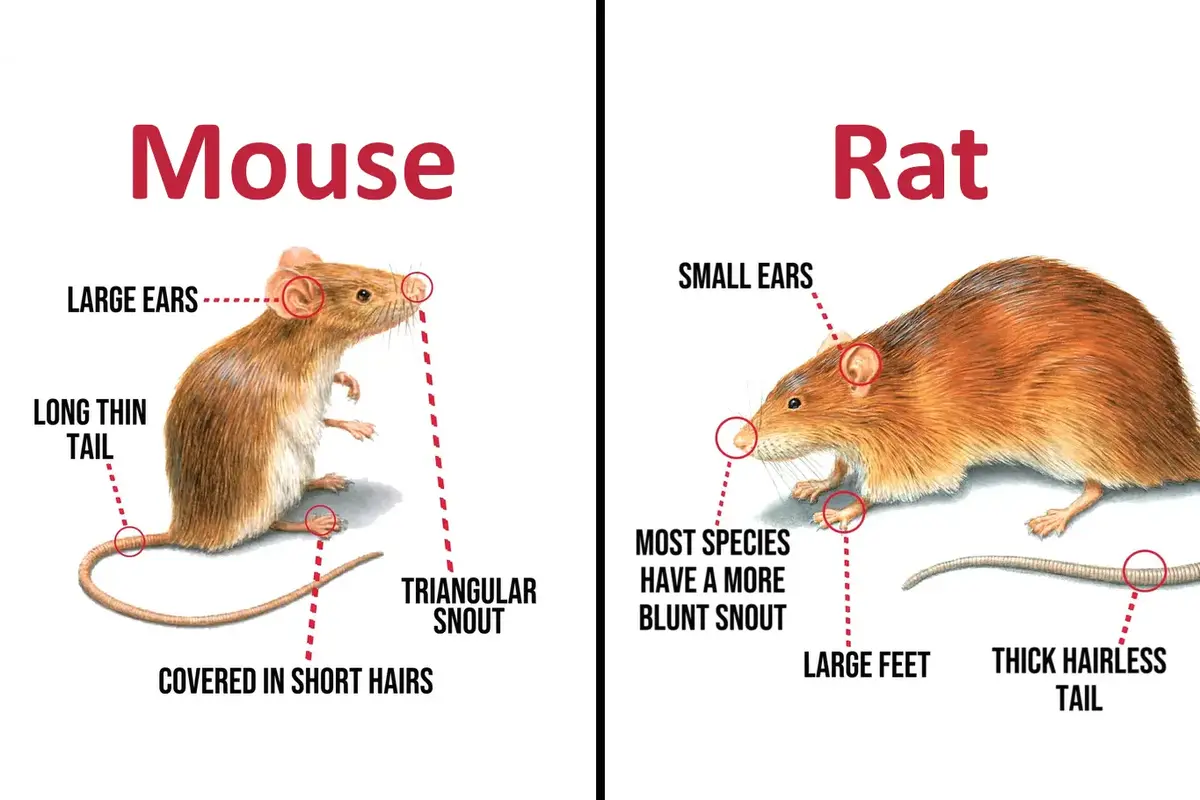
Mice make light, quick scratching sounds, often on upper floors. Rats are heavier and usually stay lower in the house. Droppings found in the basement or attic near the wall are the clearest clue.
Can rodents in walls damage wiring?
Yes. Rodents gnaw constantly, and wiring insulation, plastic pipes and wood framing are all at risk. Chewed wiring can create a fire hazard, so it is worth having an electrician check any damage found during the inspection.
Why did the noise stop suddenly?
The rodent may have moved, or it may have died inside the wall. If a bad smell follows within a few days, see our dead rodent removal page for how the source is found.
Does insulation in the walls make it worse?
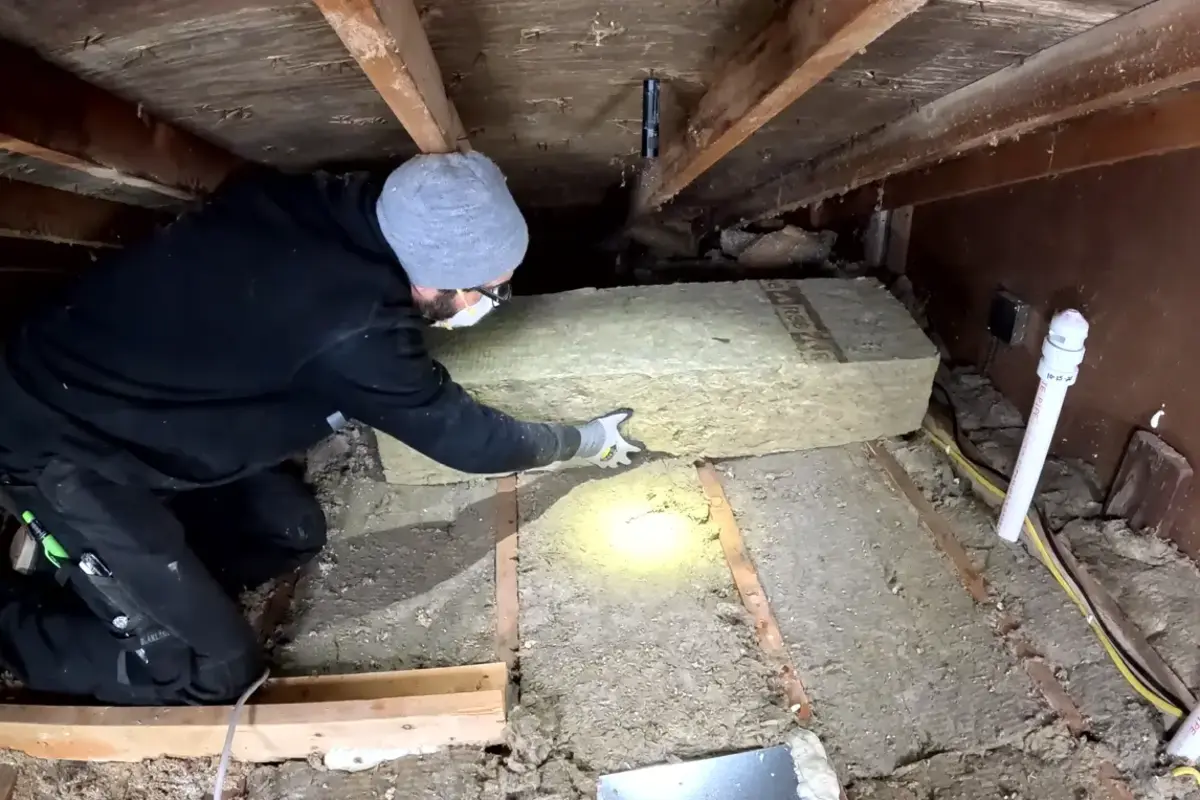
Insulated wall cavities give rodents warm, protected nesting space. Removal is the same, but sealing the bottom and top of the cavity is especially important in insulated walls.
Mice and Rats in Walls in Pictures
These illustrations show how rodents get into wall cavities, what they leave behind and how a provider confirms which species is causing the noise. Use them to compare with what you find in your basement, attic and around the outside of the house.

Mice & Rats in Walls: Common Questions
Will the mice in my walls leave on their own?
Rarely. Walls give them warmth and safety, and they’ll keep using them as long as they can get in and find food.
Can you tell exactly where they are in the wall?
Usually close enough. Combining sounds, droppings and entry points lets technicians find the active areas without guesswork.
Do you have to cut holes in my drywall?
Most jobs don’t. A small access hole is used only when a trapped or dead animal can’t be reached any other way, and it’s easy to patch.
Why do I hear them more in winter?
Rodents move indoors when it gets cold and stay closer to warm areas like walls near furnaces, chimneys and kitchens.
Can mice chew through drywall?
Yes, mice and rats can chew through drywall, especially at corners and edges. They usually prefer existing gaps, though, which is why sealing those points is so effective.
Related Rodent Services in Minneapolis
Mouse Exterminator
Rat Removal
Urgent Rodent Removal
Attic Rodent Removal
Dead Rodent Removal
Rodent Exclusion
Commercial & Rental Properties
Questions to Ask Before You Hire
- Can I see your Minnesota pest control license number?
- Will you give me a written quote before starting?
- What exactly does the treatment or exclusion include?
- Do you offer any warranty or follow-up visits, and what are the terms?
- How do you handle cleanup and dead rodent removal?
Your call connects you with an independent local pest control provider.