
Rodent Exclusion in Minneapolis — Seal the House Once, Stop Fighting Mice Every Fall
Rodent exclusion Minneapolis homes need is the step that turns a temporary fix into a lasting one. Trapping fixes today’s problem. Exclusion fixes the reason you have the problem. A local provider can close every opening a mouse or rat can use, with materials that stand up to chewing and Minnesota winters.
Your call connects you with an independent local pest control provider.
- Talk to a Real Person
- Independent Local Providers
- Minneapolis & Nearby Suburbs
- Ask for a Written Plan
What Rodent Exclusion Actually Means
Exclusion, also called rodent proofing, is the work of finding every gap a rodent can use and closing it for good. It’s the most important part of long-term rodent control, and it’s the part quick-service companies most often skip.
Done right, exclusion isn’t a can of spray foam around the obvious hole. It’s a careful survey of the entire house, from the roof peak to the bottom of the foundation, followed by repairs matched to each type of gap. In Minnesota, those repairs also have to hold up through freeze-thaw cycles, ice, snow load and temperature swings of a hundred degrees across the year.
Materials That Hold Up in Minnesota
| Material | Where it’s used | Why it works |
|---|---|---|
| Stainless steel mesh | Pipe and wire penetrations, small cracks | Rodents can’t chew it and it doesn’t rust |
| Galvanized hardware cloth | Vents, crawl spaces, burrow barriers | Strong, rust-resistant, lets air through |
| Sheet-metal flashing | Sill plates, roof returns, gnawed edges | Covers wide gaps and chew points |
| Garage door rodent guards | Bottom corners of garage doors | Metal stops chewing through rubber seals |
| Flexible exterior sealant | Over mesh and around frames | Moves with seasonal expansion without cracking |
| Concrete patch | Slab and foundation cracks | Permanent fix for rat entry points |
Plain expanding foam is not on that list for a reason. Mice chew through it easily, and it breaks down in sunlight and cold. Foam, if used at all, should only be a backer behind steel mesh.
Where Sealing Happens on a Typical Twin Cities Home
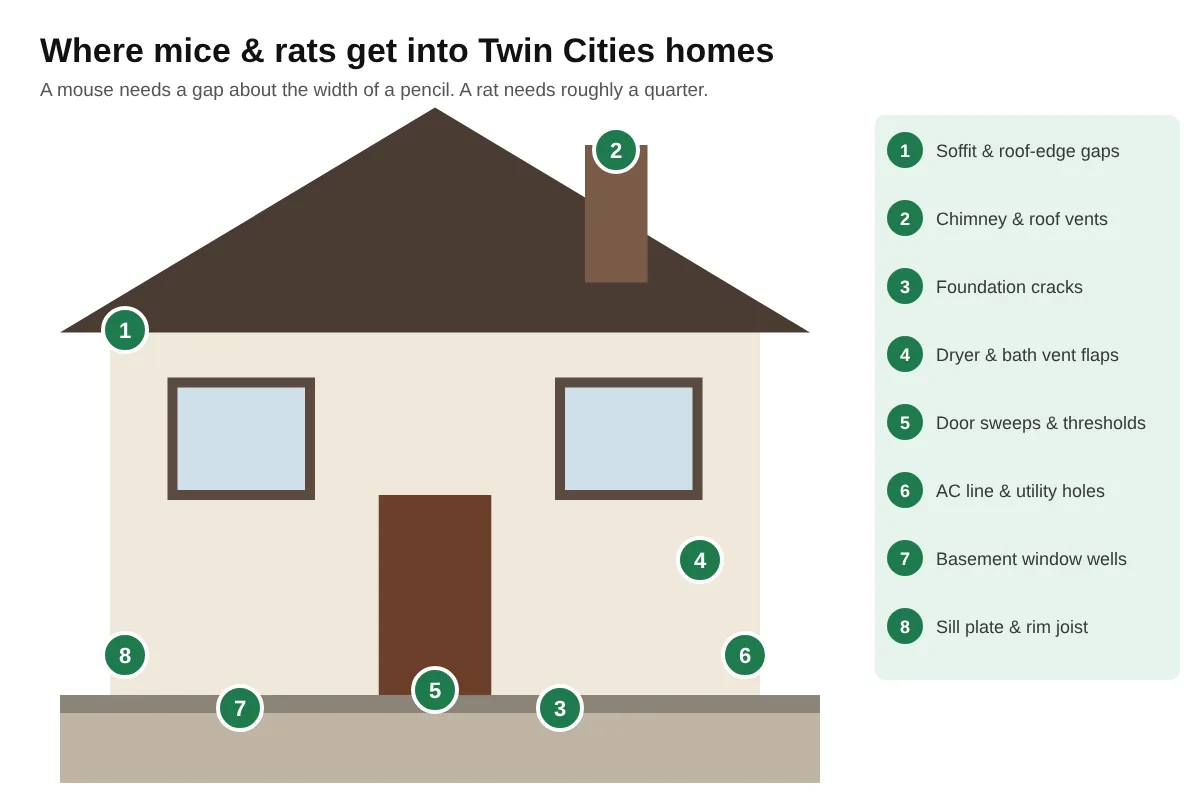
- Sill plate and rim joist gaps around the foundation
- Gas, water, electric, cable and AC line penetrations
- Dryer, bath fan and kitchen exhaust vents
- Garage door corners and side doors
- Basement windows and window wells
- Soffits, roof returns and gable vents
- Chimney flashing and plumbing roof vents
- Deck, porch and stoop connections to the house
Older homes need extra attention
Fieldstone and rubble foundations, common in pre-war Minneapolis neighborhoods, have mortar joints that crumble over time. Those joints and the spaces where the foundation meets the wood framing are some of the most common mouse entry points in the area. They need mortar repair or metal-backed sealing, not caulk.
Exclusion vs. Ongoing Trapping: The Math
Plenty of homeowners pay for trapping or bait service every fall for years. It works for a while, then the mice come back, because the openings never changed. Exclusion costs more up front, but it’s usually a one-time project with long-lasting results.
Think of it like a leaky roof. You can keep putting buckets under the drips every time it rains, or you can fix the roof. Sealing the house is fixing the roof.
Signs your home needs exclusion
- You’ve had mice more than one winter in a row
- You trap mice every fall and they keep coming
- Your home has a stone or block foundation
- You hear activity in walls or the attic
- You’ve recently remodeled or added on
Your call connects you with an independent local pest control provider.
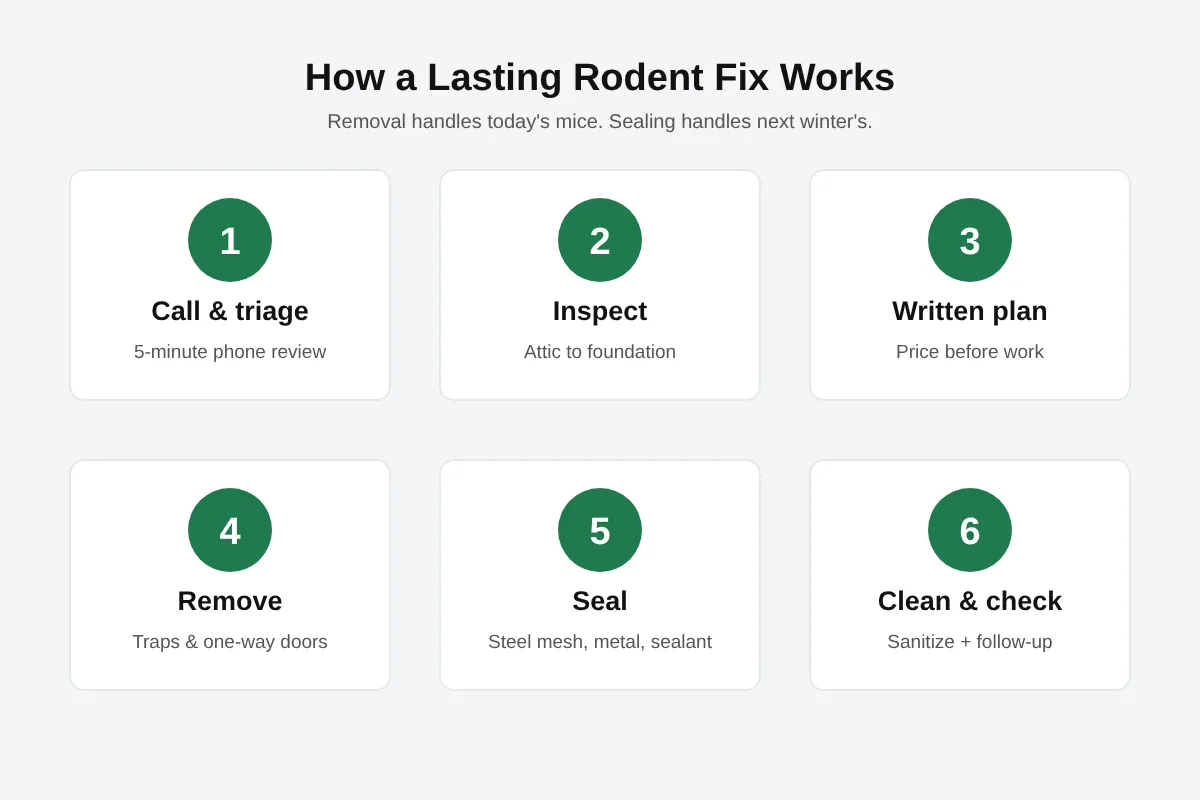
How Rodent Exclusion Usually Works
Phone review
The provider learns the house age, style and the activity you’ve seen.
Full-house survey
Roof to foundation, with photos of every gap.
Itemized plan
Each repair listed so you see the full scope before work starts.
Remove rodents inside
Trapping runs alongside so nothing is sealed in.
Seal & repair
Each gap closed with the right material for that spot.
Inspect & warrant
Final walk-through; ask whether the provider warrants their sealing work.
Rodent Exclusion Minneapolis: Freeze-Thaw, Frost Heave and Materials That Last
Sealing a house in Minnesota is harder than in milder climates. Every winter, frost works into the soil and pushes foundations, steps and slabs a little; every spring it lets go. Caulk shrinks in deep cold, wood rots at the sill plate, and gaps that were sealed in October can reopen by April. Good exclusion work plans for that movement.
Materials that hold up
Copper mesh doesn’t rust the way steel wool does. Galvanized hardware cloth (1/4-inch mesh) works on vents and crawl-space openings. Sheet metal and flashing protect corners and gaps rodents like to gnaw, and polyurethane or hybrid sealants stay flexible far below freezing. Plain expanding foam, on its own, gets chewed through.
Where exclusion work happens
Foundation and sill plate gaps, utility penetrations, dryer and bath vents, garage door corners and seals, soffits and roof vents, chimney chases and the joints where additions meet the original house.
When to do it
Late summer and early fall are ideal, before mice start moving indoors and while sealants cure well. Exclusion can be done in winter too, but some materials need warmer days to set.
The Minneapolis Health Department’s mouse fact sheet recommends the same priority: seal openings of about 1/4 inch or larger first.
Exclusion materials at a glance
- Copper mesh: pipe and wire penetrations
- Hardware cloth: vents and crawl-space openings
- Sheet metal: gnawed corners and door edges
- Door sweeps and garage seals: ground-level gaps
- Flexible sealant: final weather seal over mesh
Rodent Exclusion Minneapolis: More Questions Answered
Is rodent exclusion worth it if I only see a mouse or two?
Often, yes. A mouse or two in the kitchen usually means an open entry point somewhere. Sealing it now prevents a larger winter population and the cleanup that comes with it.
Can I do exclusion myself?
Many small gaps around pipes and vents are reasonable DIY projects with copper mesh and sealant. The hard part is finding every opening, including the ones at the roof line and behind siding. A professional inspection can give you a complete list even if you do some of the work yourself.
Will sealing trap rodents inside the walls?
It can if sealing happens before the rodents inside are removed. Providers usually trap first, confirm activity has stopped, then complete the sealing, or use one-way exits on certain entry points.
How long does exclusion work last?
Quality materials can last for years, but Minnesota’s freeze-thaw cycles, settling and new utility work can open new gaps. A quick check each fall keeps the seal intact.
Does exclusion include the garage?
It should. Attached garages are one of the most common routes into Twin Cities homes, especially through worn door seals and the joint where the garage meets the house.
Rodent Exclusion in Pictures
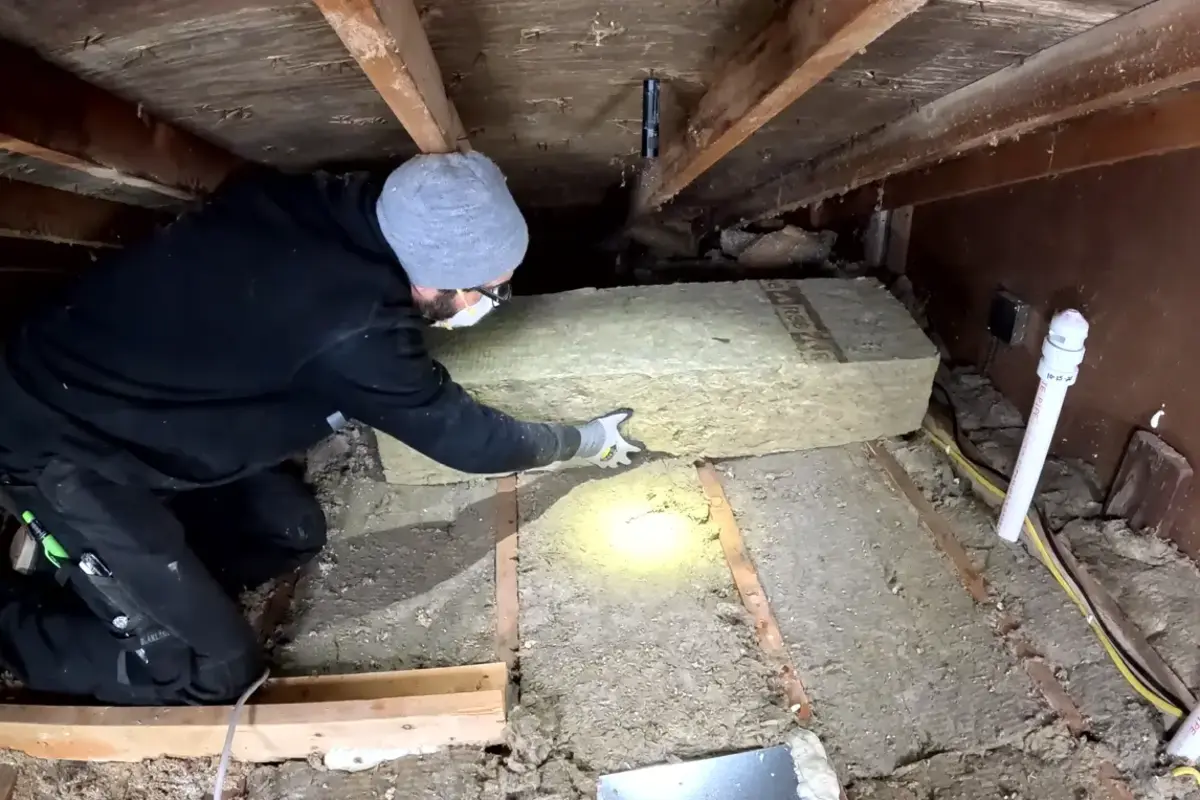
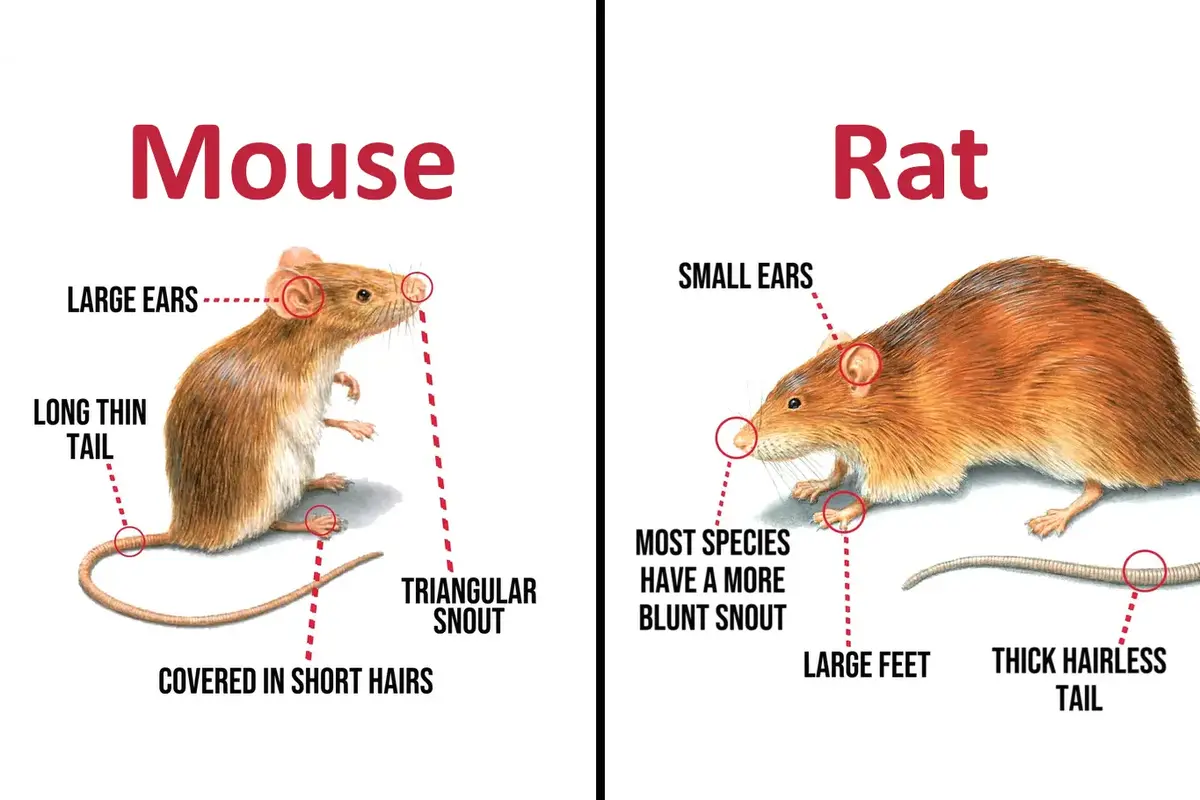
These illustrations show the openings rodents use most, the difference between mice and rats when choosing materials, and where sealing fits into the overall process. Use them as a checklist when you walk your own house in the fall.
Rodent Exclusion: Common Questions
If you seal the house, won’t the mice be trapped inside?
That’s why trapping and sealing happen together. Removal runs alongside exclusion, and one-way exits are used where needed so rodents can leave but not return.
How long does exclusion last?
Metal-based repairs last many years. New gaps can appear as a house settles or after renovations, so a quick check every year or two is smart.
Can I do rodent proofing myself?
You can handle easy items like door sweeps and steel wool in small gaps. The hard part is finding every opening, especially up high and along the foundation.
When is the right time to seal a house in Minnesota?
Late summer and early fall, before rodents start moving indoors. But sealing works any time of year, including winter.
Does exclusion stop all insects too?
It helps with some, since many of the same gaps let in insects, but it’s designed for rodents. Insect control is a separate service.
Related Rodent Services in Minneapolis
Mouse Exterminator
Rat Removal
Urgent Rodent Removal
Mice & Rats in Walls
Attic Rodent Removal
Dead Rodent Removal
Commercial & Rental Properties
Questions to Ask Before You Hire
- Can I see your Minnesota pest control license number?
- Will you give me a written quote before starting?
- What exactly does the treatment or exclusion include?
- Do you offer any warranty or follow-up visits, and what are the terms?
- How do you handle cleanup and dead rodent removal?
Your call connects you with an independent local pest control provider.