
Mouse Exterminator in Minneapolis, MN — Clear the Mice and Close the Door Behind Them
Hiring a mouse exterminator Minneapolis homeowners trust should mean more than a few traps under the sink. One mouse in the kitchen usually means a family of them in the walls. A local provider can find where they’re living, remove them, and seal the gaps they used so the next wave of cold weather doesn’t bring a fresh batch.
Your call connects you with an independent local pest control provider.
- Talk to a Real Person
- Independent Local Providers
- Minneapolis & Nearby Suburbs
- Ask for a Written Plan
Why Minneapolis Homes Get Mice Every Single Fall
The house mouse is the most common rodent in Twin Cities homes, and it’s built for exactly this climate. It can’t survive a Minnesota winter outdoors for long, so starting in late September it goes looking for warmth. Your basement, attached garage and wall cavities are the obvious targets.
Mice are also tiny. An adult can flatten itself through a gap about a quarter of an inch wide, which is smaller than most people imagine. Old weatherstripping, the space around a gas line, a dryer vent with a broken flap or a crack along the sill plate are all wide open doors.
Once inside, a pair of mice can turn into dozens in a few months. Females can have a new litter roughly every three weeks, and each litter can include five or six pups. That’s why a problem that seems small in October can feel like an invasion by January.
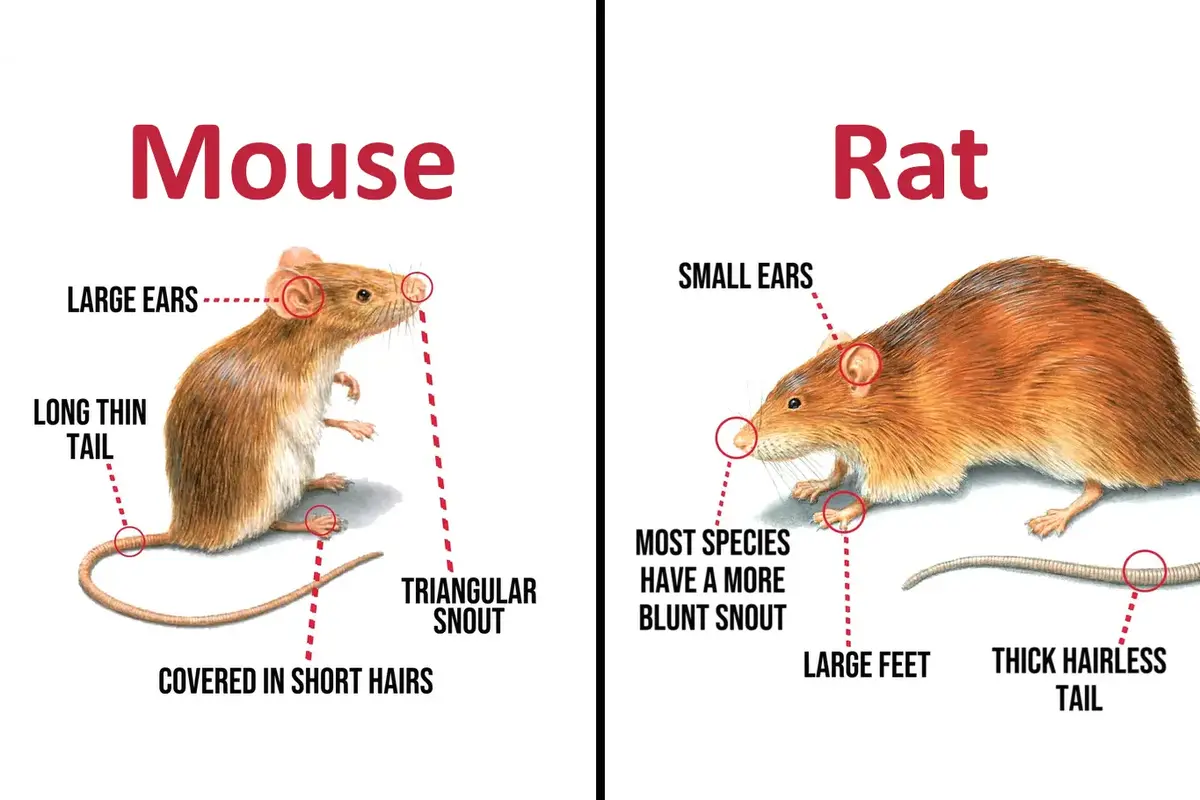
How to Tell You Have Mice, Not Rats
Mice and rats leave different clues. Getting the ID right matters, because the traps, bait placement and sealing details are different for each one.
- Droppings are small, about the size of a grain of rice, with pointed ends
- Activity is often high up: kitchen cabinets, attics, upper walls and ceilings
- Light scratching or quick pitter-patter sounds at night
- Tiny chew holes in food boxes, bags of birdseed or dog food
- Nests of shredded paper, cardboard or insulation in drawers or storage boxes
Deer mice vs. house mice
Minnesota also has deer mice, which have white bellies, white feet and bigger eyes. They’re more common in garages, cabins, sheds and homes near wooded areas or open land. Deer mice can carry hantavirus, so droppings from them deserve extra care during cleanup. Read our hantavirus safety guide for the details.
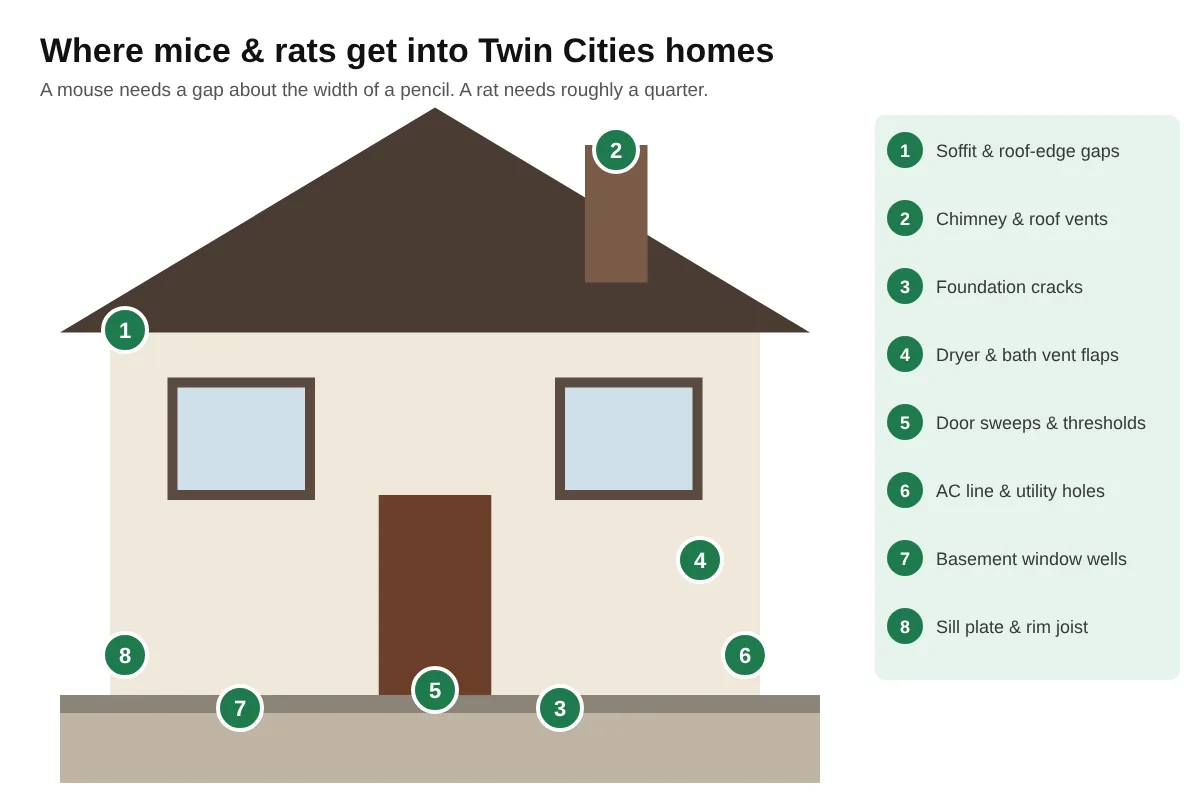
Where Mice Get Into Twin Cities Houses
Every house has its own weak spots, but after enough inspections, the same openings show up again and again. These are the first places worth checking:
- Gaps where the wood sill plate sits on the foundation
- Openings around gas lines, water lines, cable and AC refrigerant lines
- Garage door corners and worn bottom seals
- Dryer vents and bathroom fan vents with missing or broken flaps
- Basement window wells and old window frames
- Unscreened attic and roof vents, plus gaps where the roof meets the soffit
- Spaces under exterior doors with worn sweeps
Sealing these is the difference between getting rid of mice for a month and getting rid of them for good. Learn more about rodent exclusion service.
Why Store-Bought Traps Usually Aren’t Enough
A few snap traps from the hardware store will catch some mice. The trouble is that mice are curious but careful, and they quickly learn which paths are dangerous. Most DIY setups catch the bold ones and miss the rest of the family.
Placement is the bigger issue. Mice run along walls and behind appliances, not across open floors. Professionals place traps along those routes, in protected stations, and in numbers that match the activity.
And then there’s the open door problem. If you never find and seal the entry points, you’ll keep catching mice until spring, and then do it all over again the next fall. Plug-in ultrasonic devices and peppermint oil don’t change that either.
Your call connects you with an independent local pest control provider.
Common Mouse Problems in Minneapolis Neighborhoods
Where you live in the city changes where mice show up first. In Longfellow, Nokomis and Standish, it’s often older bungalows with fieldstone basements where mice come in low and head straight for the kitchen. In Northeast and North Minneapolis, a lot of duplexes share walls and attics, so one unit’s mice quickly become the neighbor’s mice too.
Around the Chain of Lakes and Minnehaha Creek, homes back up to parks and green space that support large outdoor mouse populations all summer. When the first cold front comes through, those mice don’t have far to go. Newer condos and townhomes downtown and in the North Loop aren’t immune either. Mice regularly move through utility chases and parking garages into units several floors up.
What you can do today
- Move pet food and birdseed into hard plastic or metal bins with lids
- Clean up crumbs behind the stove and fridge
- Keep firewood at least 20 feet from the house
- Trim shrubs and branches back from the siding
- Check that the garage door seals tightly to the floor
These steps won’t fix an active infestation, but they make your home less inviting while you wait for a provider.
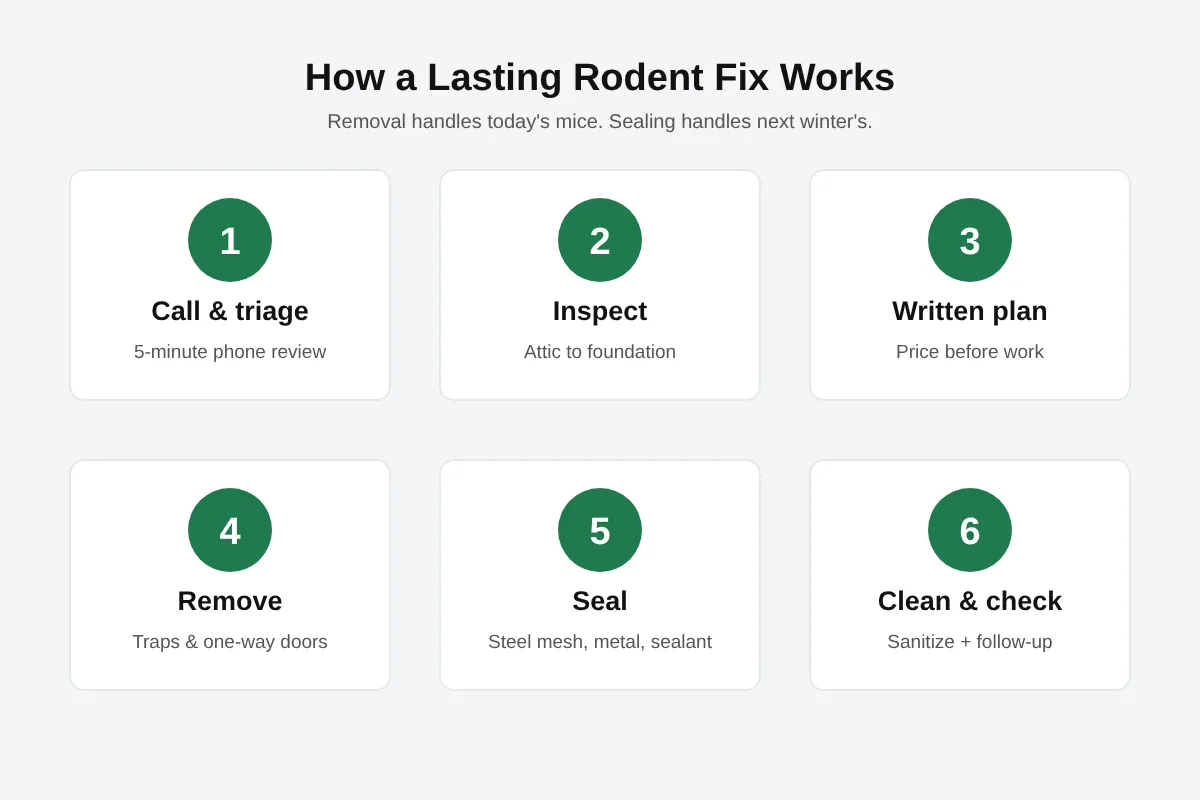
How Mice Are Removed From Minneapolis Homes
Quick call
The provider asks what you’ve seen and heard to plan the visit.
Inspection
Inside and outside, attic to foundation, with photos of entry points.
Written plan
Clear scope and price before any work starts.
Trapping
Professional traps placed along active runways, away from kids and pets.
Sealing
Every gap closed with steel mesh, hardware cloth or metal flashing.
Cleanup & check
Droppings removed, areas sanitized, final visit to confirm.
What a Mouse Exterminator Minneapolis Homes Need Actually Does Differently
House mice (Mus musculus) are small, curious and wary at the same time. They explore new objects but avoid them for a day or two, they rarely travel more than 10 to 30 feet from the nest, and a pair can produce dozens of young over a single winter. That biology explains why a professional approach looks different from what most of us try at home.
Trap placement follows the runways
Mice run along walls and under appliances, leaving greasy rub marks and droppings. Traps placed perpendicular to those runways, in quiet spots, catch far more than traps set in the open. A provider often uses many traps for a few nights rather than a few traps for weeks.
Monitoring tells you when it’s really over
Tracking powder, monitoring stations or simply checking for fresh droppings after cleanup show whether activity has stopped. Without monitoring, it is easy to declare victory too early.
Sealing closes the loop
Mice can squeeze through a gap about 1/4 inch wide. Steel wool alone rusts and loosens in Minnesota’s wet springs, so copper mesh, hardware cloth, metal flashing and sealant are preferred. The university extension guide to controlling house mice explains why exclusion is the long-term fix.

Kitchen checklist while you wait
- Move dry goods into glass or hard plastic containers
- Pull the stove and fridge out and clean behind them
- Don’t leave pet food out overnight
- Seal gaps around pipes under the sink
- Wipe droppings wet with disinfectant, never sweep them
Mouse Problems in Pictures
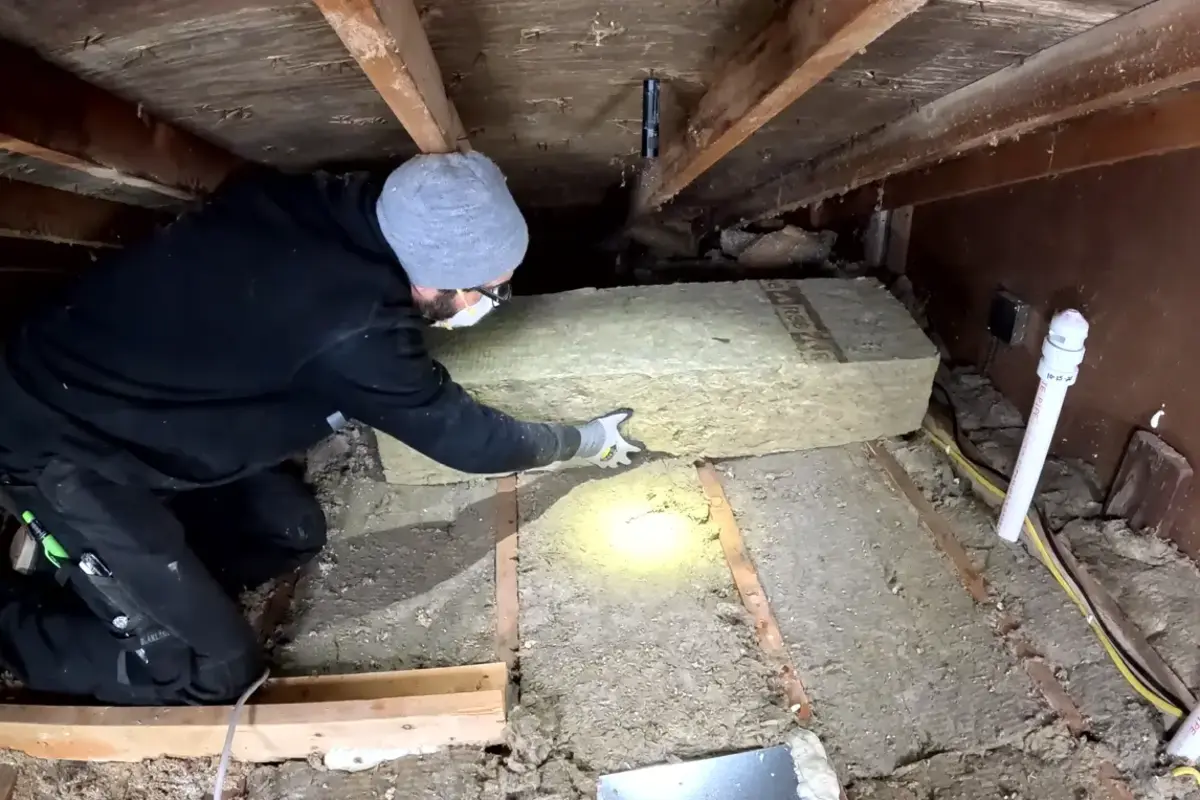
These illustrations show what a mouse exterminator in Minneapolis looks for first: the signs mice leave behind, the entry points they use and how house mice compare with rats. If you spot any of these at home, note where and when, because those details help the provider set traps in the right places from the first visit.
Mouse Exterminator: Common Questions
How long does it take to get rid of mice?
Most homes see a sharp drop in activity within a week. A full job, including sealing and a final check, usually takes two to three weeks.
Is one mouse really a problem?
Usually yes. Mice live in groups and breed quickly, so a single sighting typically means more are nearby, especially in fall and winter.
Are the traps safe around my dog or cat?
Traps are placed in enclosed stations or in spots pets can’t reach. Ask the provider to talk through placement with you before anything is set.
Can I stay in my home during treatment?
Yes. Trapping and sealing don’t require you to leave, and there’s no need to fog or spray the living space.
Do mice leave on their own in spring?
Some move outdoors, but most stay where food and shelter are easy. Without sealing, the ones that leave are often replaced by new ones the next fall.
Do mice carry diseases?
They can. House mice can spread bacteria like salmonella through droppings on food surfaces, and deer mice can carry hantavirus. Proper cleanup and sealing food in containers reduce the risk.
Related Rodent Services in Minneapolis
Rat Removal
Urgent Rodent Removal
Mice & Rats in Walls
Attic Rodent Removal
Dead Rodent Removal
Rodent Exclusion
Commercial & Rental Properties
Questions to Ask Before You Hire
- Can I see your Minnesota pest control license number?
- Will you give me a written quote before starting?
- What exactly does the treatment or exclusion include?
- Do you offer any warranty or follow-up visits, and what are the terms?
- How do you handle cleanup and dead rodent removal?
Your call connects you with an independent local pest control provider.