
Rodent Control FAQs — Straight Answers for Minneapolis Homeowners
These rodent control FAQs come from the questions Twin Cities homeowners and businesses ask most. Got a question about mice, rats or what to expect from a rodent control visit? You’ll probably find the answer here. If not, just call.
Your call connects you with an independent local pest control provider.
- Talk to a Real Person
- Independent Local Providers
- Minneapolis & Nearby Suburbs
- Ask for a Written Plan
More Rodent Control FAQs: Prevention, Pets and Kids
Do cats keep mice away?
A cat may catch the occasional mouse, but it won’t stop new ones from entering, and cats can be exposed to parasites and disease from rodents. Sealing entry points is still the real fix.
Are snap traps safe around children and pets?
Snap traps should go inside tamper-resistant boxes or in places kids and pets can’t reach, such as behind appliances or in closed cabinets. Glue boards are not recommended in living areas.
Do peppermint oil or dryer sheets repel mice?
Scents may make mice avoid a spot briefly, but there is little evidence they keep rodents out of a house. Focus on food storage and sealing.
Should I worry about mice in my car?
Yes, especially in winter. Mice nest in engine bays and air filters and chew wiring. See our guide to mice in your car engine.
How do I report rats on a neighbor’s property?
In Minneapolis, call 311 to reach city inspectors. The Minneapolis Health Department’s mouse fact sheet includes reporting information and prevention tips.
Rodent Control FAQs: Seasonal and Property Questions
When is rodent season in Minnesota?
Mice start moving indoors in September and October as nights get cold, and activity inside homes peaks through winter. Norway rats are most visible outdoors in summer but stay active year-round near food and shelter.
Do mice hibernate?
No. Mice stay active all winter, which is why they look for warm buildings with food. Indoors they can keep breeding through the cold months.
Why do I hear mice at night but never see them?
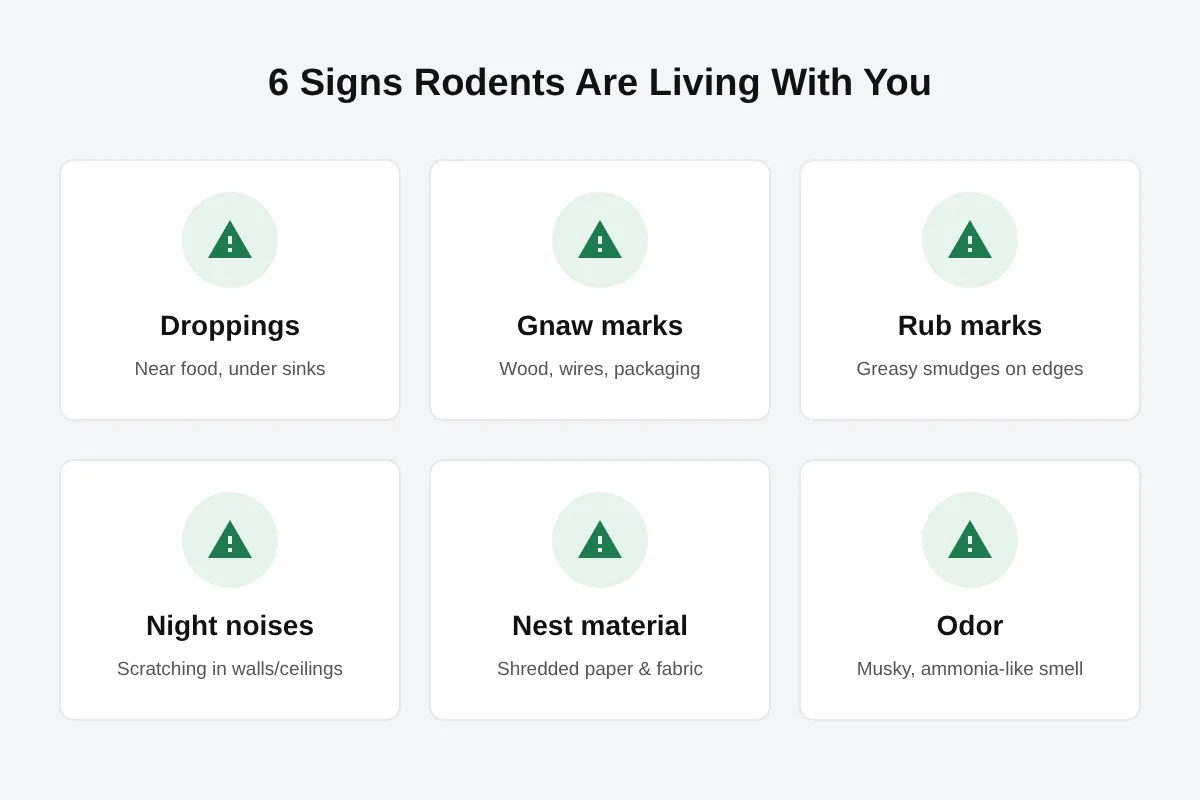
Mice and rats are mostly nocturnal and avoid open spaces. They travel inside walls, under appliances and along edges, so noises and droppings are usually the first signs rather than sightings.
Are rats a problem in the suburbs too?
Yes, especially near creeks, rivers, rail lines, restaurants and areas with outdoor food sources. Many suburban calls involve rats under decks, sheds and garage slabs.
Should I worry about mice in my garage?
Garages are a common first stop. Mice that nest in a garage often find their way into the house, chew stored items and even nest in parked cars. Sealing the garage is part of most plans.
Can rodents get in through the toilet or drains?
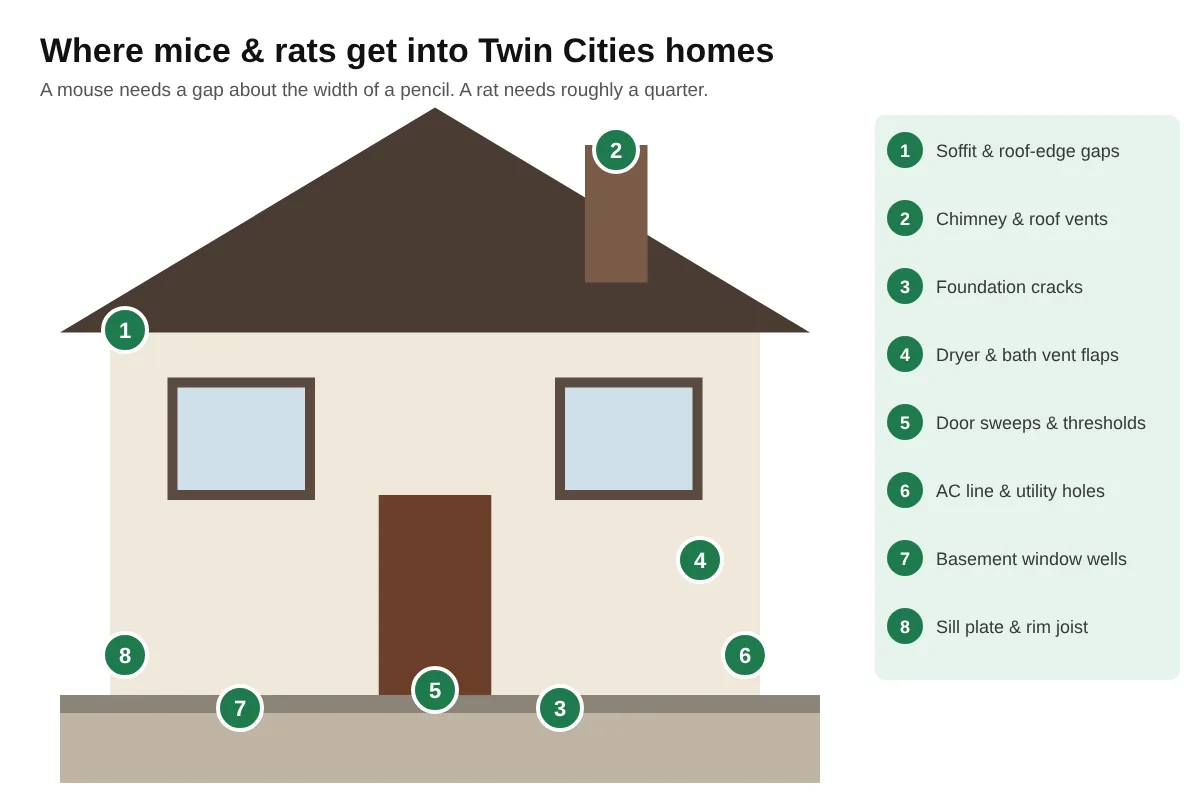
It is possible for rats to travel through sewer lines in some situations, but it is uncommon in single-family homes. Most rodents enter through gaps at the foundation, garage, vents and utility lines.
Is it safe to stay in the house during rodent control?
Yes. Indoor work is mostly trapping and sealing, and any exterior stations are tamper-resistant. Ask the provider about specific products if anyone in the household has health concerns.
How can landlords prevent repeat complaints?
Schedule building-wide inspections, seal shared spaces such as trash rooms and basements, respond quickly to tenant reports and keep written records of every visit.
Rodent Control FAQs: Quick Reference
A one-glance summary of the questions we hear most often, with links to the pages that go deeper.
| Question | Short answer | Learn more |
|---|---|---|
| Mice or rats? | Check dropping size and where you hear them | Rat removal |
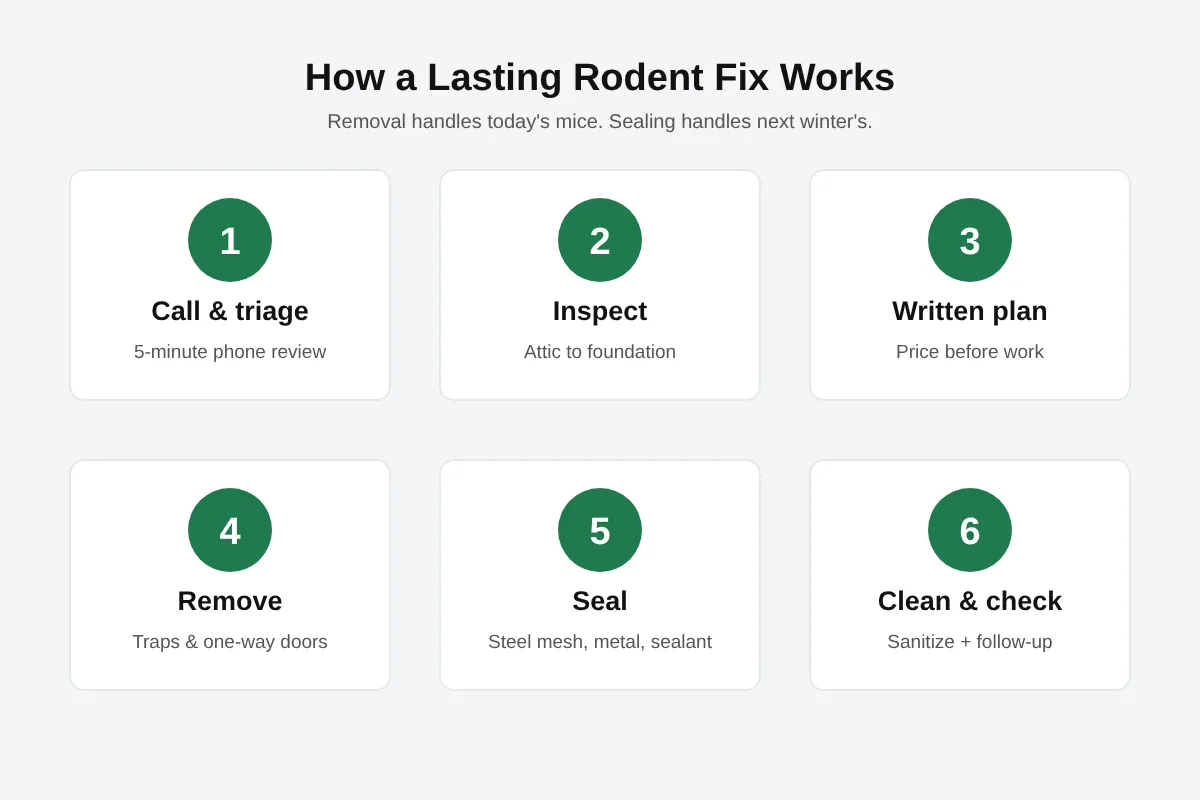
| How long will it take? | Usually 1–3 weeks for a home | How it works |
| What affects the price? | Building size, entry points, cleanup needs | Cost factors |
| Is cleanup dangerous? | Use wet methods and gloves; never sweep dry | Hantavirus safety |
| How do I keep them out? | Seal gaps of about 1/4 inch or more | Rodent exclusion |
Rodent Control FAQs in Pictures
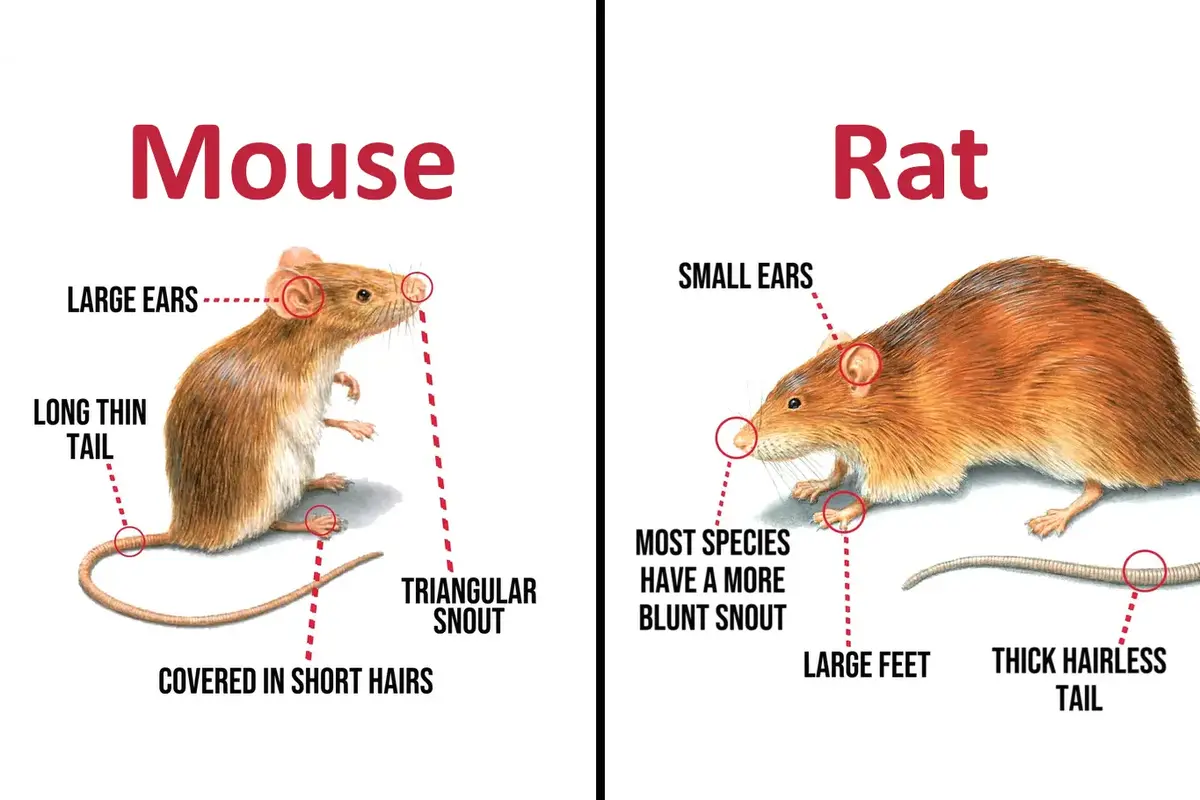
Many questions are easier to answer with a picture. These illustrations cover identification, entry points and the overall process.
Your call connects you with an independent local pest control provider.
Rodent Control FAQs for Businesses and Property Managers
What should a restaurant do after a rodent sighting?
Protect or discard any exposed food, clean and sanitize the area, document what happened and arrange an inspection. Ongoing monitoring with written logs helps during health inspections and shows the problem is being managed.
Are exterior bait stations safe around customers?
Tamper-resistant, locked stations are designed to keep bait away from children, pets and wildlife. They are usually placed along exterior walls away from entrances and checked on a regular schedule.
How do I handle rodents in a warehouse?
Focus on dock doors, door sweeps, pallet storage and perimeter vegetation. Interior traps and exterior stations are mapped and checked regularly, and findings are recorded for audits.
Who pays for rodent control in a rental?
In most cases the property owner arranges and pays for rodent control, particularly when rodents enter through the building structure or shared spaces. Lease terms and local rules can affect the details.
Can one program cover several buildings?
Yes. Property managers often set up a single program with a shared schedule and reporting across multiple sites, which makes it easier to spot patterns and budget for service.
How quickly should tenant complaints be addressed?
As soon as possible. Rodents move between units through shared walls and chases, so a quick building-wide response prevents one complaint from becoming many.
Getting Started
What happens when I call the number on this site?
Your call is routed to an independent pest control provider that serves your part of the Twin Cities. Tell them what you’ve noticed, such as droppings, scratching, gnaw marks or a rodent you saw, and where. They’ll explain how they handle it and, if it makes sense, set up a visit to look at the property. Calls to (612) 471-0821 may be recorded for quality purposes.
Is Norvane a pest control company?
No. Norvane Rodent Control is a referral service. We don’t send anyone to your home or do any of the work. The provider you speak with is an independent business, and any agreement about price, scheduling or warranty is between you and that provider.
Does it cost anything to use this referral service?
No. There’s no charge for being connected. Any fee for an inspection, trapping, sealing or cleanup comes from the provider, so ask them to put the price in writing before work starts.
How do I know if I need a professional?
If you’ve seen more than one mouse, find droppings in more than one area, hear noises in walls or ceilings, or have rats anywhere on the property, it’s time to call (612) 471-0821. Small problems grow fast.
What areas do you serve?
Minneapolis and nearby suburbs including St. Paul, Bloomington, St. Louis Park, Richfield, Brooklyn Park, Edina, Brooklyn Center and Fridley. See all service areas.
How fast can someone come out?
Timing depends on the provider’s schedule and your location, so ask about availability when you call. If a rodent is loose in the house right now, see our urgent rodent removal page.
Mice and Rats
How can I tell mice from rats?
Mouse droppings are rice-sized; rat droppings are closer to an olive pit. Rats burrow outdoors and are heavier and louder. Mice climb into walls, cabinets and attics.
Why do I get mice every fall?
Cold weather pushes mice indoors. If your home has unsealed gaps, new mice find them each year until the openings are closed.
Can mice really fit through tiny holes?
Yes. A mouse can fit through a gap about a quarter inch wide. Rats need about half an inch.
Are mice and rats dangerous?
They can contaminate food, spread bacteria, chew wiring and, in the case of deer mice, carry hantavirus. Read our hantavirus guide.
Treatment and Safety
Do providers use poison?
Most providers avoid loose poison inside a home, because a poisoned mouse can die in a wall and cause odor problems. Indoors, traps and sealing are usually the safer approach, and locked bait stations tend to be used outdoors only. Ask the provider what they plan to use and where.
Is treatment safe for pets and kids?
Traps are placed in enclosed stations or out-of-reach spots, and you can ask the provider to go over placement with you.
Do I have to leave my home?
Usually not. Most rodent work relies on traps and sealing rather than sprays or fogging. If a provider plans to use anything that would require you or your pets to step out, they should tell you before they start.
What materials are used for sealing entry points?
Providers commonly use stainless steel mesh, galvanized hardware cloth, sheet-metal flashing, concrete patch and flexible exterior sealant, picked for each opening. Expanding foam alone is easy for mice to chew through, so it’s fair to ask what will go into each gap.
Cost and Warranties
How much does rodent control cost?
It depends on the home and the problem. See our cost guide for what drives the price.
Do you require a contract?
Contract terms are set by the provider. Ask whether a long-term contract is required before you agree to anything; commercial properties often choose ongoing service plans.
Is the work covered by a warranty?
It depends on the provider. Some offer a written warranty on sealing work; ask for the terms in writing before work begins.
Do you charge for the inspection?
Inspection fees vary by provider. Ask about any fee when you call, before the visit is booked.
Your call connects you with an independent local pest control provider.