Rodent Prevention Checklist for Twin Cities Restaurants and Food Businesses
Restaurant rodent prevention works well as a routine, not a reaction. For a restaurant, a single mouse can cause real damage. A customer sees it and posts about it. An inspector finds droppings in dry storage. A delivery comes in with a stowaway. Suddenly you’re dealing with violations, refunds, and a hit to your reputation.
Rodent prevention in a food business isn’t about one big fix. It’s about small habits done every day. Here’s a checklist built for Twin Cities restaurants, cafes, bakeries, and food shops.
Why rodents target food businesses
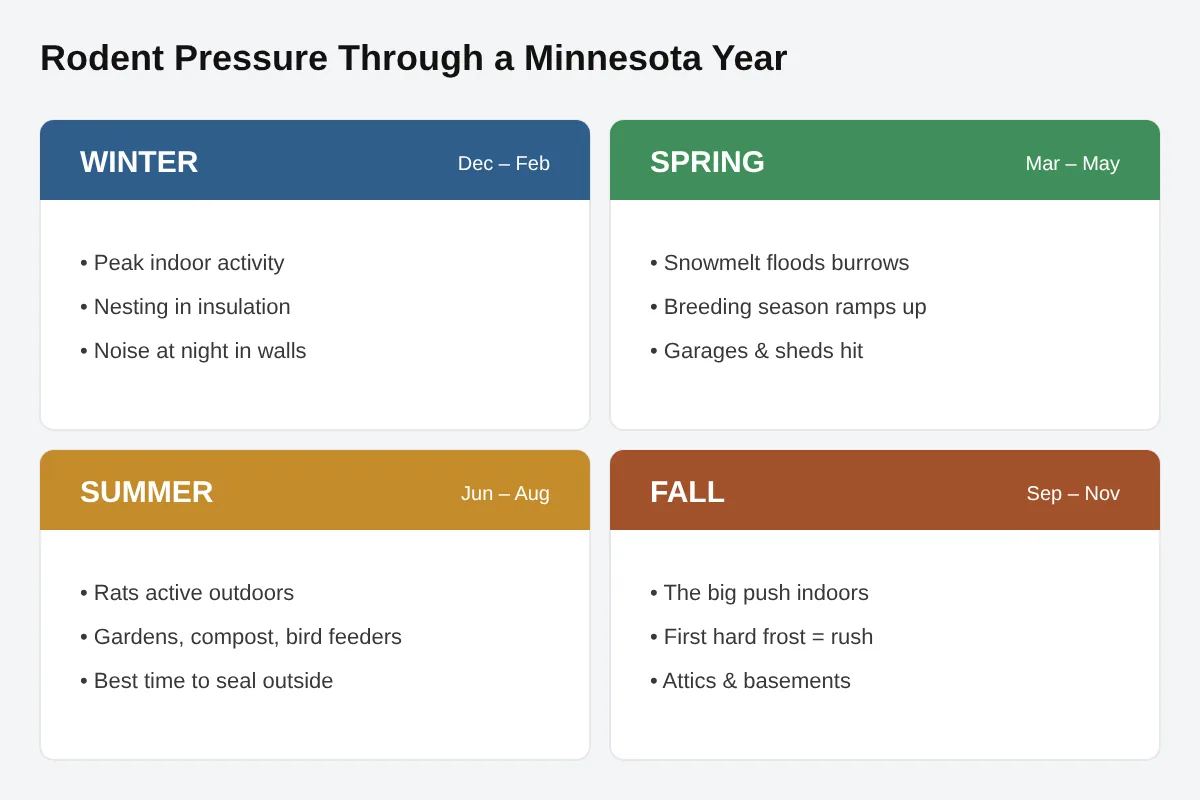
Food, water, warmth, and shelter are all in one place. Back doors open constantly. Deliveries arrive in cardboard. Dumpsters sit right outside. And in Minnesota winters, mice and rats are looking for warm buildings.
Daily checklist
- Clean floors, especially under and behind cooking equipment, at the end of every shift
- Wipe down prep surfaces and put away open food
- Store dry goods in sealed, hard containers, not open bags or boxes
- Keep back doors closed when not in use. No propping them open
- Empty indoor trash and keep lids closed
- Check traps or monitoring devices and note any activity
Weekly checklist
- Pull out movable equipment and clean behind and under it
- Check dry storage for droppings, gnaw marks, or damaged packaging
- Inspect door sweeps and seals on all exterior doors
- Clean floor drains and make sure drain covers are in place
- Check the dumpster area. Lids closed, no overflow, no spilled food
Monthly checklist
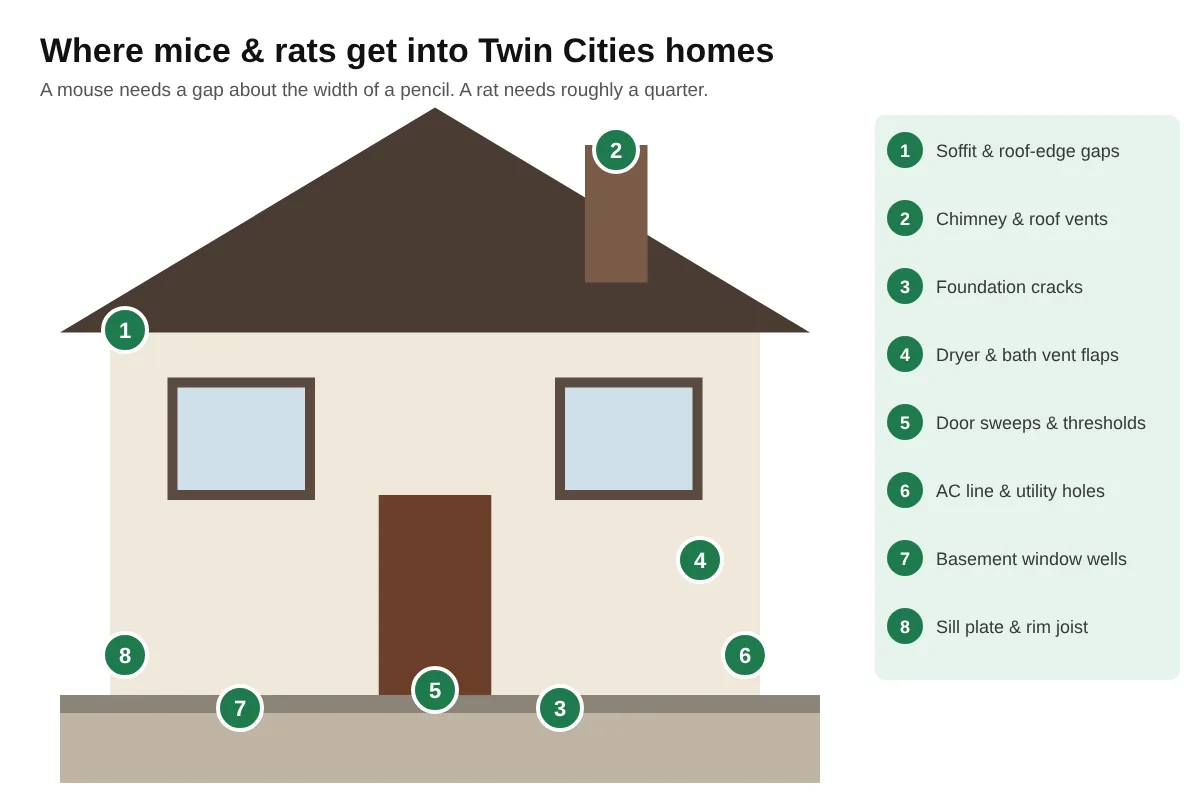
- Walk the outside of the building and look for gaps around pipes, vents, and the foundation
- Check the roofline and any rooftop equipment for openings
- Look at the gaps where utility lines enter the building
- Review your pest control service records and trap logs
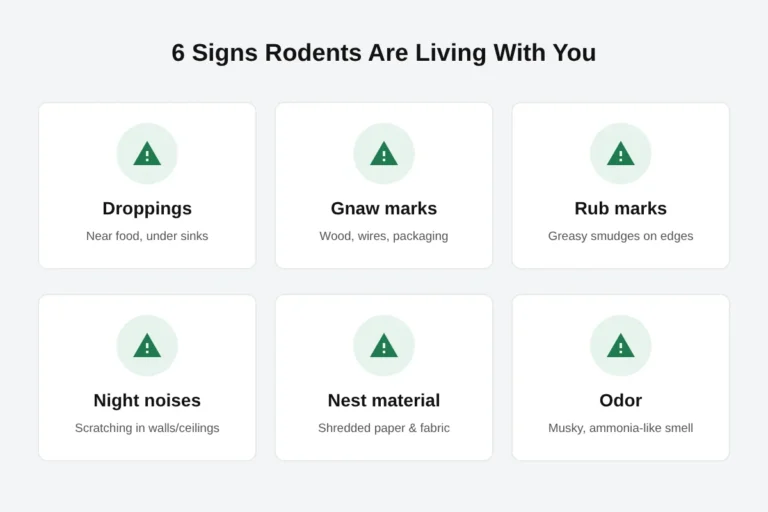
- Train new staff on what signs of rodents look like and who to tell
Receiving deliveries
Deliveries are one of the easiest ways rodents get in.
- Inspect boxes and packaging before bringing them inside
- Break down and remove cardboard quickly. Rodents love to nest in it
- Store products off the floor on shelves, ideally 6 inches up and away from walls
- Rotate stock so older products are used first
Dumpsters and outside areas
- Keep dumpster lids closed and request more frequent pickup if they overflow
- Keep the dumpster as far from the back door as possible
- Clean up spilled food and grease around the dumpster
- Keep grease containers sealed
- Cut back weeds and remove clutter near the building
Why a professional program helps
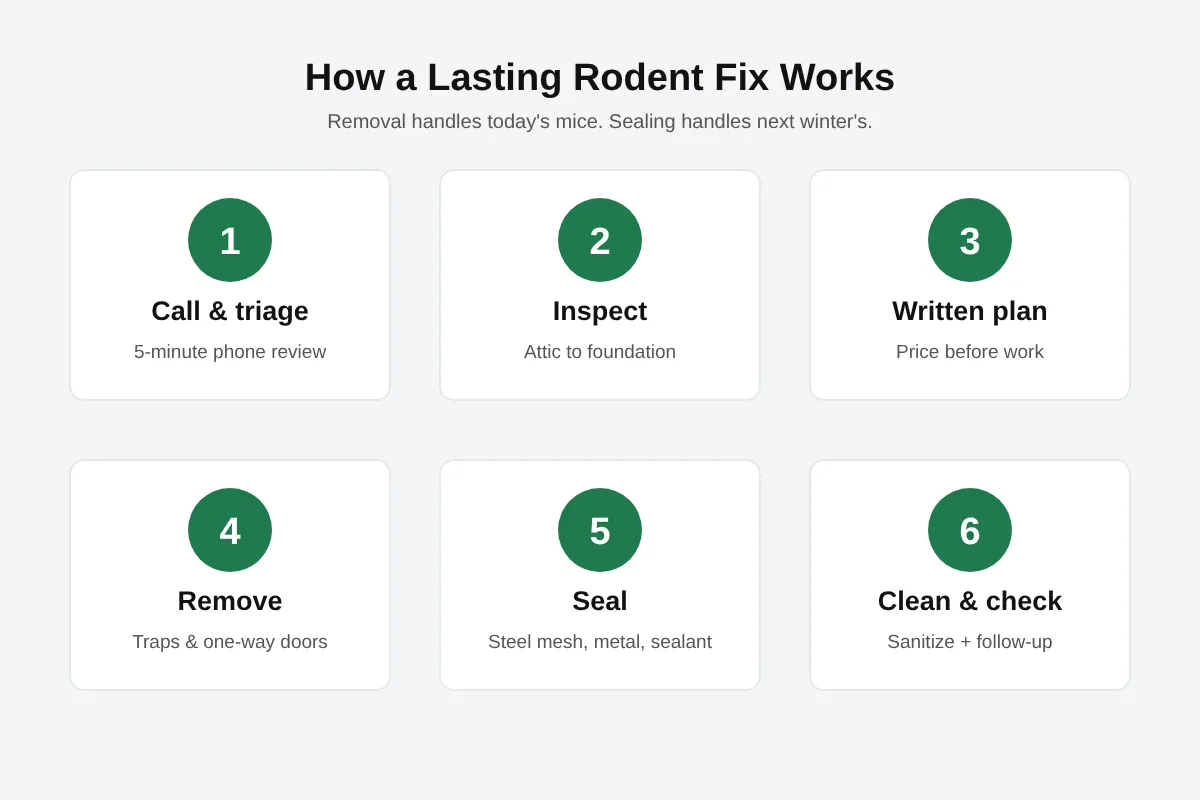
A professional rodent control program for restaurants usually includes:
- Exterior tamper-resistant bait stations around the building
- Interior traps and monitoring in kitchens, storage, and back areas
- Sealing gaps, door sweeps, and other exclusion work
- Scheduled visits, often monthly
- Service records and device maps you can show a health inspector
That paper trail matters. When an inspector asks how you handle pests, you want records that show regular service and quick action.
If you’ve already seen a rodent
Don’t wait. A rodent sighting in a food business can quickly turn into a bigger problem. Call for urgent rodent removal, especially if a customer saw it or there’s contamination in food areas. For ongoing service, start with our Minneapolis rodent control page.
Calls are connected with independent providers who serve food businesses across Minneapolis, St. Paul, Edina, Bloomington, and the rest of the metro.
Restaurant Rodent Prevention During a Minnesota Winter
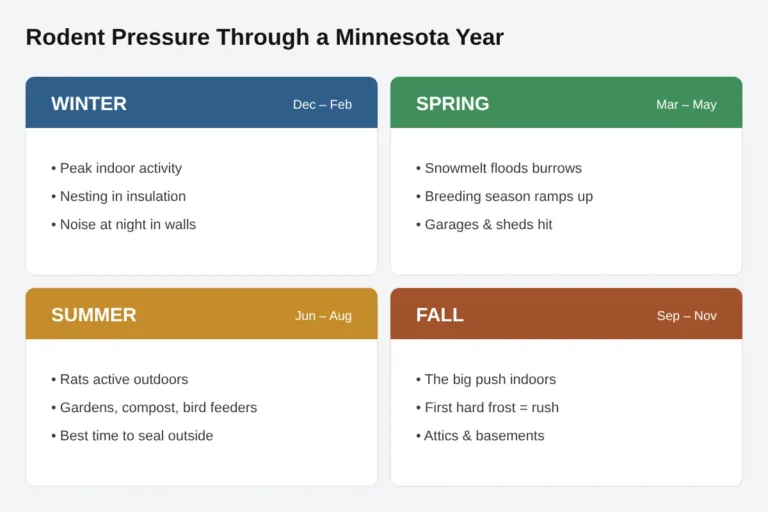
Cold weather changes the risk for Twin Cities restaurants. Snowbanks pile up against back doors and dumpster enclosures, door sweeps get torn by ice and salt, and rodents that spent summer outdoors look for heat. Kitchens with warm equipment and constant food are an obvious target.
- Check door sweeps and back-door seals after every major snowfall
- Keep snow cleared away from walls and dumpster pads so you can see burrows and gaps
- Inspect the area behind cooking lines and dish machines where heat collects
- Watch delivery cases and produce boxes more closely in fall
- Review service records monthly and act on every finding
Minneapolis food businesses are inspected by the city, and the Minneapolis Health Department’s mouse fact sheet lists the same basics: seal, clean and work with a pest control company on a regular schedule. For a full program, see commercial rodent control in Minneapolis.
Restaurant Rodent Prevention and Health Inspections
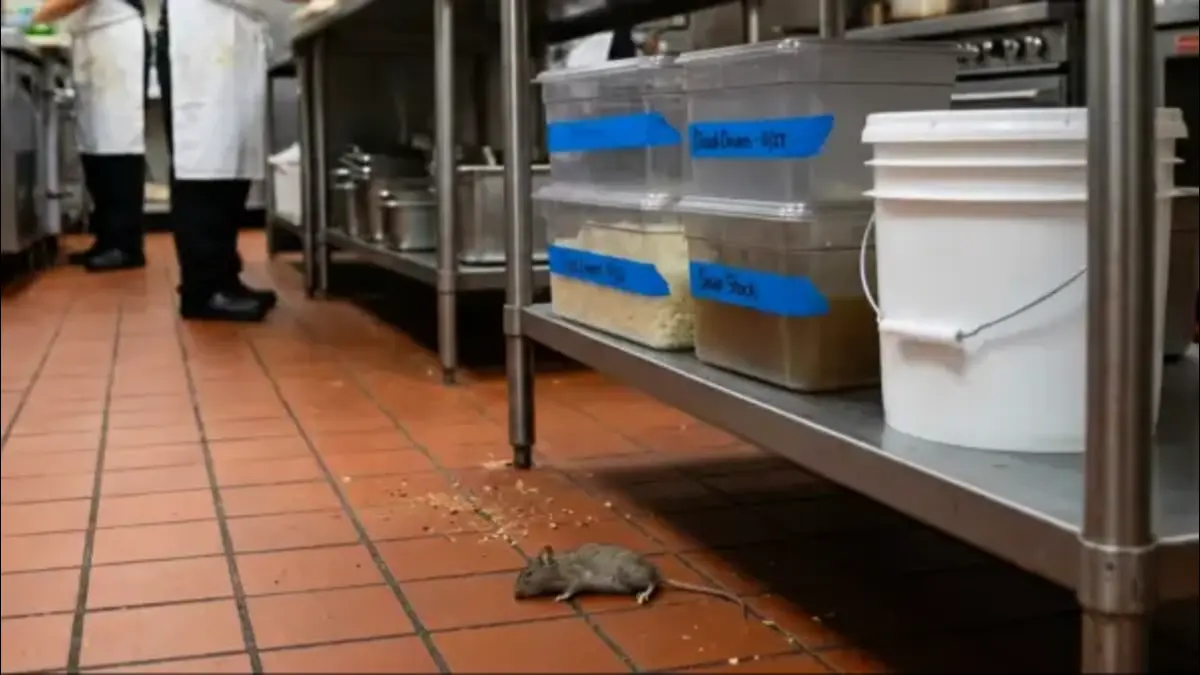
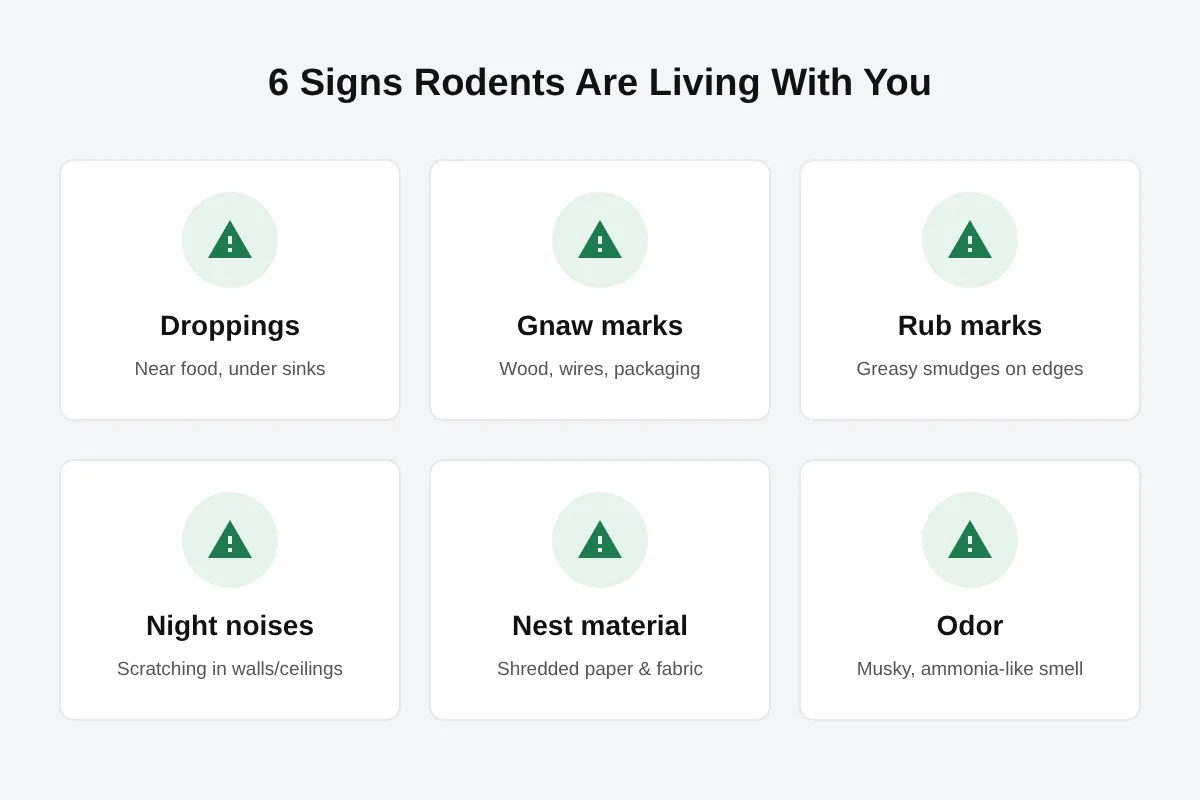
Health inspectors look for evidence of rodents, conditions that attract them and proof that the business is managing the risk. Droppings in dry storage, gnawed packaging, gaps under doors and overflowing dumpsters are all red flags. A clean kitchen with a documented pest management program tells a very different story.
What to keep on file
- Service reports from each pest control visit, with dates and findings
- A map of trap and bait station locations
- Records of repairs made to doors, walls and drains
- Cleaning schedules for storage rooms, under equipment and dumpster areas
- Notes on any sightings and the action taken
Training your staff
Every shift should know what rodent signs look like and who to tell. Short, regular reminders work better than a one-time talk: check corners of dry storage when restocking, keep back doors closed, report droppings immediately and never leave food out overnight. Staff who close the kitchen play the biggest role, because rodents are most active at night.
Restaurant Rodent Prevention for Storage and Receiving
Deliveries are a common way rodents and their droppings enter a kitchen. Inspect cases and produce boxes on arrival, break down cardboard quickly and move stock onto shelving at least six inches off the floor and away from walls. Rotate stock so nothing sits untouched for weeks, and store dry goods in sealed bins once opened.
Outside, keep dumpster lids closed, clean the pad regularly and keep grease bins sealed. Trim landscaping back from walls so a clear strip lets you spot burrows and gaps. These steps make any monitoring program far more effective.
Your call connects you with an independent local pest control provider.