
Rodent Control in Brooklyn Park, MN — Where New Homes Meet Open Land
Rodent control Brooklyn Park MN homeowners need is shaped by the open land right outside the back door. Brooklyn Park has newer subdivisions right next to fields, creeks and the Mississippi River. When those open areas cool down in fall, mice head straight for the nearest warm house. A local provider can help keep them out.
Your call connects you with an independent local pest control provider.
- Talk to a Real Person
- Independent Local Providers
- Minneapolis & Nearby Suburbs
- Ask for a Written Plan
Why Brooklyn Park Homes Deal With Mice and Rats
A lot of Brooklyn Park’s housing was built from the 1970s onward, and some neighborhoods are still being developed next to open land and former farm fields. Fields and tall grass support large mouse populations, and construction nearby can disturb them and send them looking for new shelter.
Newer homes aren’t automatically rodent-proof. Newer homes routinely have unsealed gaps around AC line sets, dryer vents, hose bibs and the spots where siding meets the foundation. Builders often leave these small openings, and mice find them quickly.
The city also borders the Mississippi River and includes creeks like Rush Creek and Shingle Creek, along with large park areas. Those natural spaces keep outdoor rodent numbers high, especially for homes along their edges.
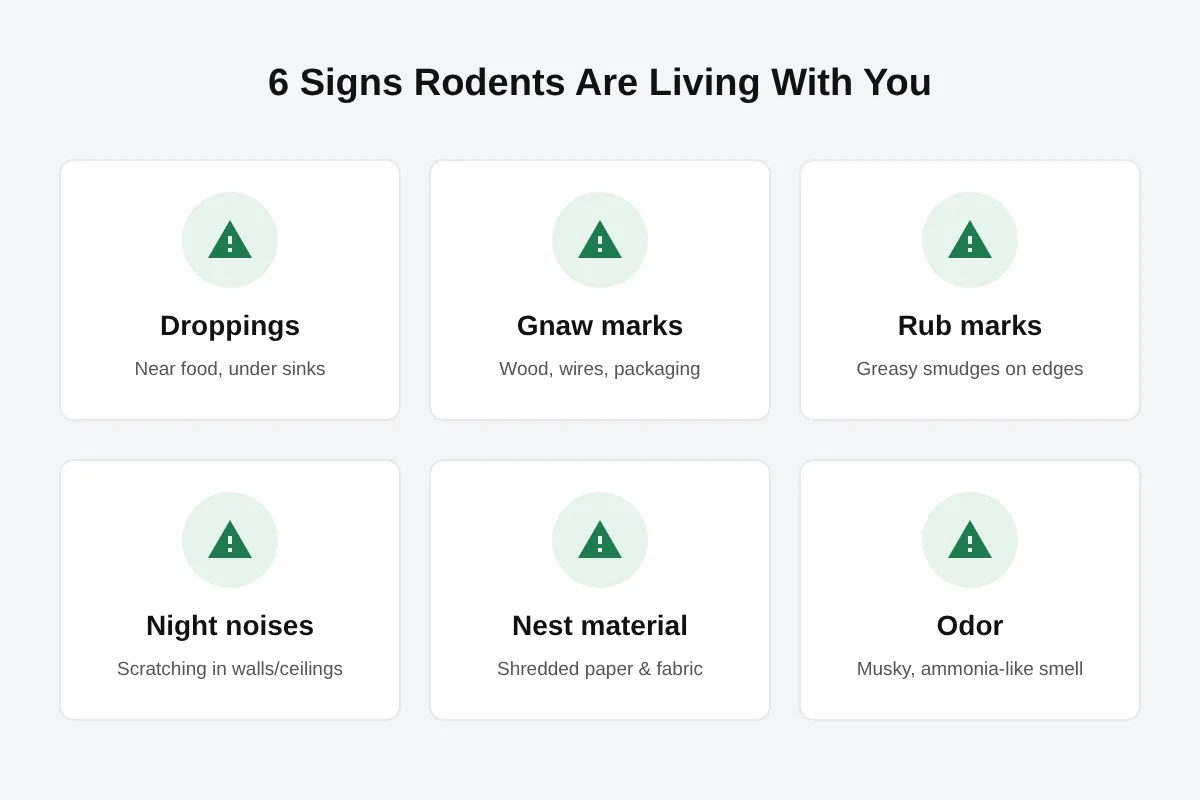
Signs of Rodents in Your Brooklyn Park Home
- Mice in the garage soon after nearby fields are harvested or graded
- Droppings along the basement rim joist
- Scratching in walls of a finished lower level
- Chewed weatherstripping on exterior doors
- Activity in sheds and around outdoor storage
Newer home? Check these spots first
If your home was built in the last 20 years, look at where the AC line set enters the house, around the dryer vent and at the corners of the garage door. These are the most common gaps on newer Brooklyn Park homes.
How Rodent Control Works in Brooklyn Park
Quick phone chat
A few questions about what’s going on in your Brooklyn Park home help the provider plan the right visit.
Roof-to-foundation check
The provider documents droppings, nests and every opening, then explains it in plain language.
Targeted trapping
Traps go where rodents actually travel, in stations kept away from kids and pets.
Close it up for good
Gaps are sealed with chew-proof, cold-rated materials and checked again on a return visit.
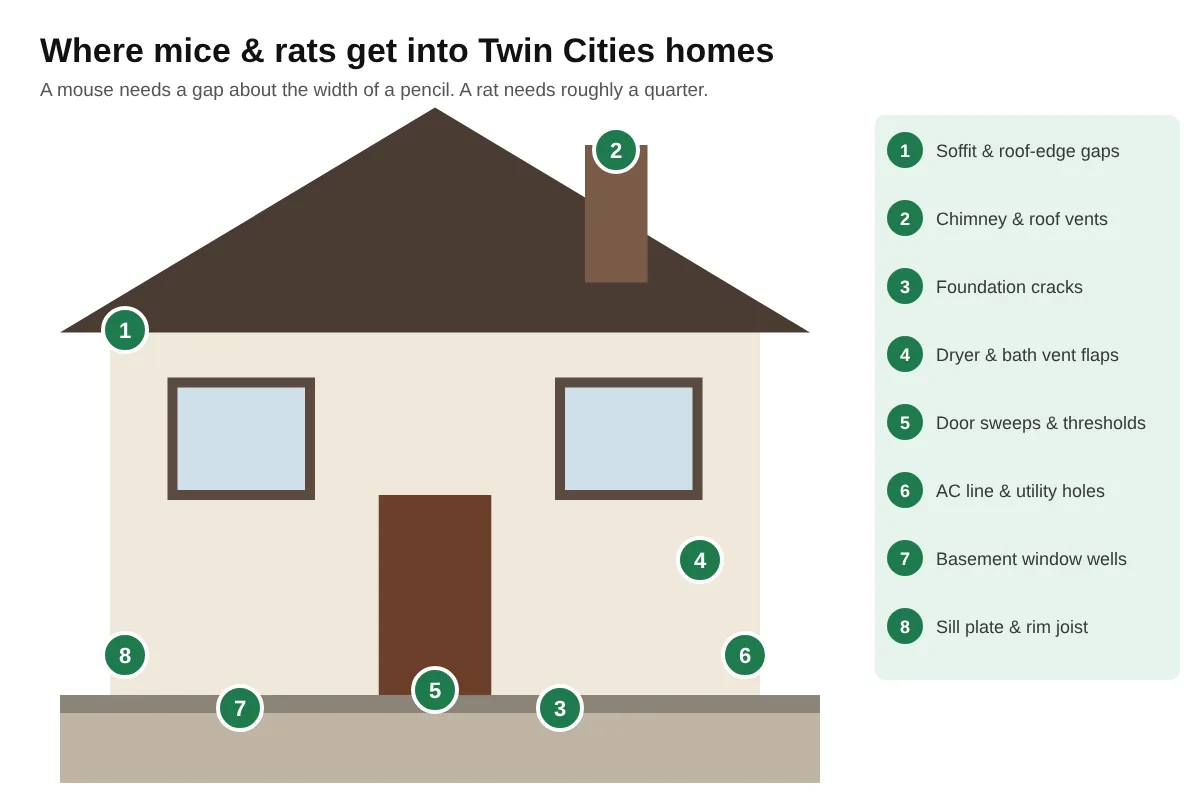
Brooklyn Park-Specific Entry Points to Seal
On Brooklyn Park homes, the usual suspects are:
- Unsealed AC line set and utility penetrations
- Gaps where siding meets the foundation
- Dryer and exhaust vents without guards
- Garage door corners and seals
- Gaps around outdoor faucets and electrical boxes
- Sump pump discharge and drain line openings
See how sealing works on our rodent exclusion page.
Neighborhoods in and Around Brooklyn Park
Calls come in from all over Brooklyn Park, including:
North Brooklyn Park
Newer subdivisions near open land and remaining farm fields.
Mississippi River area
Homes along the river and its parks, where rodent pressure stays steady.
Central Brooklyn Park
Established neighborhoods and townhome communities near the Highway 610 corridor.
Business & industrial parks
Warehouses and offices that need dock and perimeter protection.
Your call connects you with an independent local pest control provider.
Rodent Control Brooklyn Park MN: Field Mice, New Homes and Big Buildings
Brooklyn Park is one of the larger cities in Hennepin County, and it still has a mix of farm fields, parkland and newer subdivisions. Rush Creek and Shingle Creek run through the city, the Mississippi forms its eastern edge, and regional parks like Coon Rapids Dam give wildlife plenty of space. When those fields are harvested or frozen, mice look for the closest warm structure.
Newer homes aren’t rodent-proof
Houses built in the 1990s and 2000s are tighter than older homes, but they have their own gaps: unsealed penetrations behind vinyl siding, garage door corners, gaps around dryer vents and AC lines, and openings at the top of the foundation where siding ends. Deer mice and white-footed mice from nearby fields are common in garages and sheds here.
Warehouses, distribution centers and offices
The business parks along Highway 169, Highway 610 and Xylon Avenue include large warehouses with dock doors that stay open for hours. Commercial plans focus on dock seals, door sweeps, exterior bait stations where appropriate and regular monitoring with written reports.
Townhomes and apartments
In shared buildings, the association or property manager should coordinate inspections across connected units so mice don’t simply move next door.
Fall prep near open land
- Keep a 2–3 foot strip of gravel or bare ground around the foundation
- Check siding bottoms and utility entries for gaps
- Store garage items in sealed plastic totes
- Remove fallen fruit and spilled birdseed
- Clean sheds and garages using wet methods only
Because deer mice are common here, read the CDC hantavirus prevention guidance before cleaning droppings.
Common Rodent Situations in Brooklyn Park and How They Are Handled
With newer subdivisions beside fields, creeks and large business parks, Brooklyn Park sees a distinct set of rodent problems.
Field mice in a newer two-story home
After the fields behind the subdivision are harvested, mice show up in the garage and then the kitchen. The provider seals gaps behind the vinyl siding, the dryer vent and garage corners, then traps indoors until activity stops.
Deer mice in a backyard shed near Rush Creek
Nests appear in stored cushions and garden supplies. The shed is aired out and cleaned with wet methods, items move into sealed totes, and the gap under the shed door is closed with hardware cloth.
A townhome row with shared walls
Two neighbors report mice the same week. The association arranges inspections of the connected units and the shared attic space so entry points can be sealed across the building.
A distribution center off Highway 169
Mice near dock doors threaten stored goods. The site adds dock seals and door sweeps, places monitoring stations along exterior walls and keeps a written log for audits.
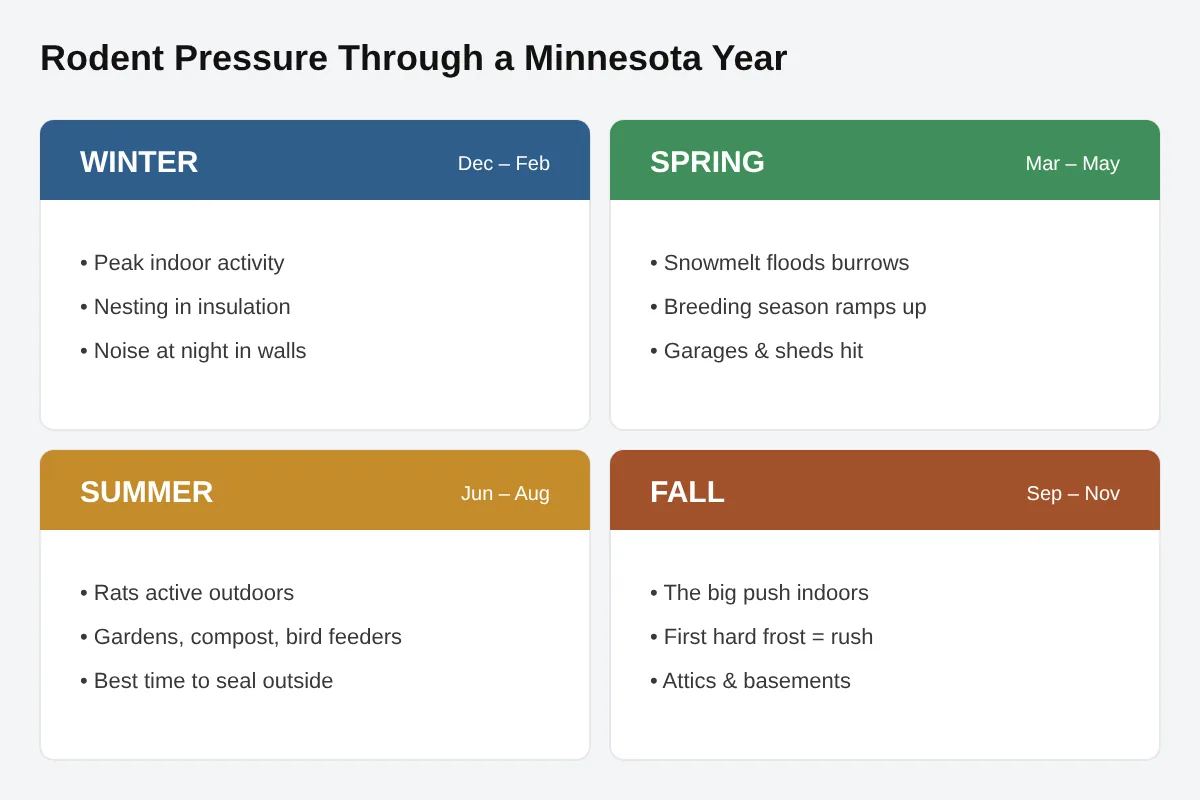
A Brooklyn Park Rodent Calendar
Fall
Harvest and frost push field mice toward homes on the edge of open land. Seal early.
Winter
Mice settle into garages, sheds and parked vehicles. Check cars stored outdoors.
Spring
Snowmelt reveals damage in sheds and garages. Clean with wet methods only.
Summer
Mow tall grass along fences and keep a clear strip around the foundation.
Rodent Control Brooklyn Park MN: Quick Answers to Local Questions
Are newer homes really at risk?
Yes. Newer homes are tighter, but gaps behind siding, around dryer vents and AC lines, and at garage door corners are common. Mice need only about a 1/4-inch opening.
Is rodent control Brooklyn Park MN residents need different near open land?
Homes beside fields and parks see more field mice and deer mice, especially in fall. Plans put extra focus on garages, sheds and the foundation line, and on careful cleanup because of hantavirus risk from deer mice.
Can mice damage my car?
Mice often nest in engine bays and air filter boxes of vehicles parked outside in winter and may chew wiring. Parking in a sealed garage and checking under the hood helps.
What do warehouses need?
Dock seals, door sweeps, exterior monitoring stations and documented service visits are the core of most commercial plans in Brooklyn Park’s business parks.
Brooklyn Park Housing Types and Their Rodent Weak Spots
From older ramblers near the river to new homes beside open fields, here is where rodents usually get into Brooklyn Park buildings.
| Property type | Where rodents get in | What usually fixes it |
|---|---|---|
| Older rambler near the Mississippi | Sill plate, garage corners, unscreened vents | Sill sealing, garage seals, vent guards |
| 1990s–2000s two-story near fields | Behind vinyl siding, AC lines, dryer vent, garage corners | Sealing behind siding and around lines, vent guards, garage seals |
| Townhome row | Shared attic, utility chases, garage walls between units | Association-wide inspection and sealing |
| Warehouse or distribution center | Dock doors, rail spurs, pallet storage, perimeter vegetation | Dock seals, door sweeps, perimeter stations, clear strip around walls |
Brooklyn Park Rodent Problems in Pictures
Brooklyn Park properties range from newer homes beside open fields to large warehouses. These illustrations show the most common clues and entry points across both, plus the process used to clear rodents out and keep them out. Compare them with what you see in your garage, shed or storage area.

Rodent Control in Brooklyn Park: Common Questions
Why does my new house have mice?
New homes often have small unsealed gaps around utility lines and vents, and many sit next to open land with large mouse populations. Sealing those gaps usually solves it.
Do you serve warehouses in Brooklyn Park?
Yes. Local providers set up commercial programs for warehouses, distribution centers and offices, including dock-door protection.
Does nearby construction cause rodent problems?
It can. Grading and building disturb rodents living in fields and push them toward nearby homes.
Can you help with mice in my shed?
Yes. Sheds and outbuildings can be inspected and sealed, and protecting them reduces pressure on the house.
Your call connects you with an independent local pest control provider.