
Rodent Control in St. Louis Park, MN — For Classic Bungalows and New Condos Alike
Good rodent control St. Louis Park residents can count on starts with knowing which kind of building you live in. St. Louis Park mixes 1940s and ’50s homes with brand-new apartments and condos. Each one has different weak spots, and a good provider knows where to look in both.
Your call connects you with an independent local pest control provider.
- Talk to a Real Person
- Independent Local Providers
- Minneapolis & Nearby Suburbs
- Ask for a Written Plan
Why St. Louis Park Homes Deal With Mice and Rats
Many St. Louis Park neighborhoods were built during the post-war boom, with compact homes, detached or tuck-under garages and basements that have seen decades of settling. Mice commonly get in at the foundation and around older garage doors.
Minnehaha Creek runs through the city, and green spaces like Westwood Hills Nature Center and the city’s many parks support healthy rodent populations outdoors. The creek corridor in particular gives rodents cover and water close to homes.
Meanwhile, newer mixed-use developments around Excelsior & Grand and the West End bring restaurants, trash rooms and parking garages that need their own approach. In multi-unit buildings, rodents move through utility chases and shared walls, so one unit’s problem quickly spreads.
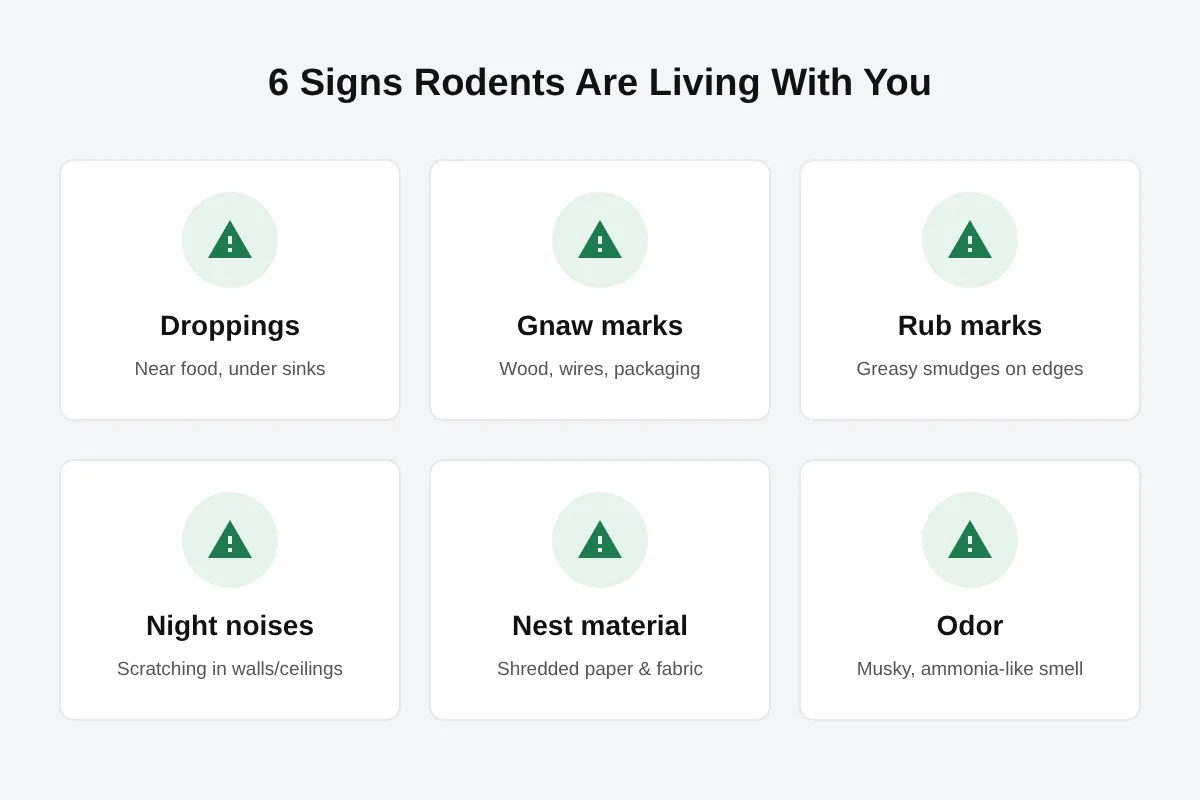
Signs of Rodents in Your St. Louis Park Home
- Droppings in the basement storage area or laundry room
- Scratching in walls next to the kitchen
- Mice in a condo unit coming from the parking garage level
- Chewed food packages in the pantry
- Rodent activity near the creek side of the yard
Condo and apartment owners
If you live in a multi-unit building, report rodent activity to your building manager as well as calling for help. Rodents travel between units, so results are better when the building is treated as a whole.
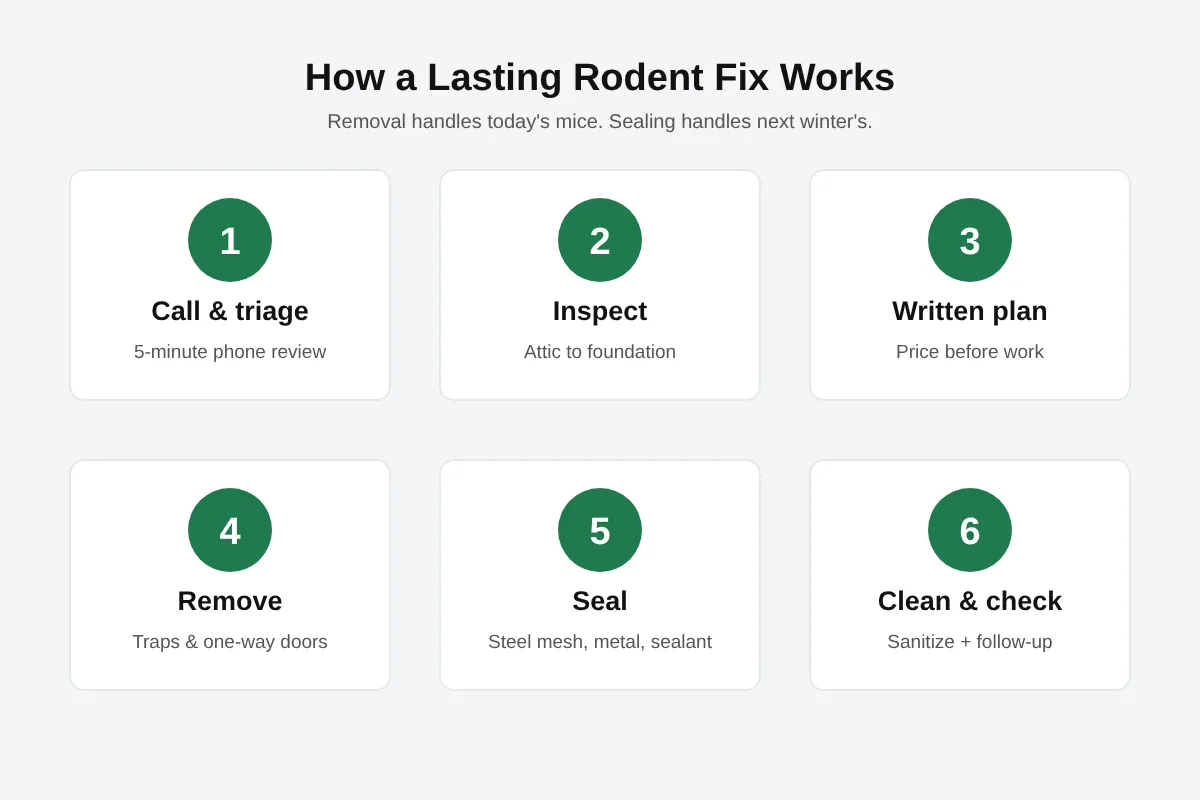
How Rodent Control Works in St. Louis Park
Start with a call
Describe the noises, droppings or smells. Visits in St. Louis Park are usually available within a day or two.
Find every way in
Inspection covers the attic, walls, basement, garage and outside of the building.
Clear out the activity
Professional traps and, where useful, one-way exits remove the rodents already inside.
Seal, clean, verify
Openings are sealed, droppings cleaned up if needed, and a final visit confirms the result.
St. Louis Park-Specific Entry Points to Seal
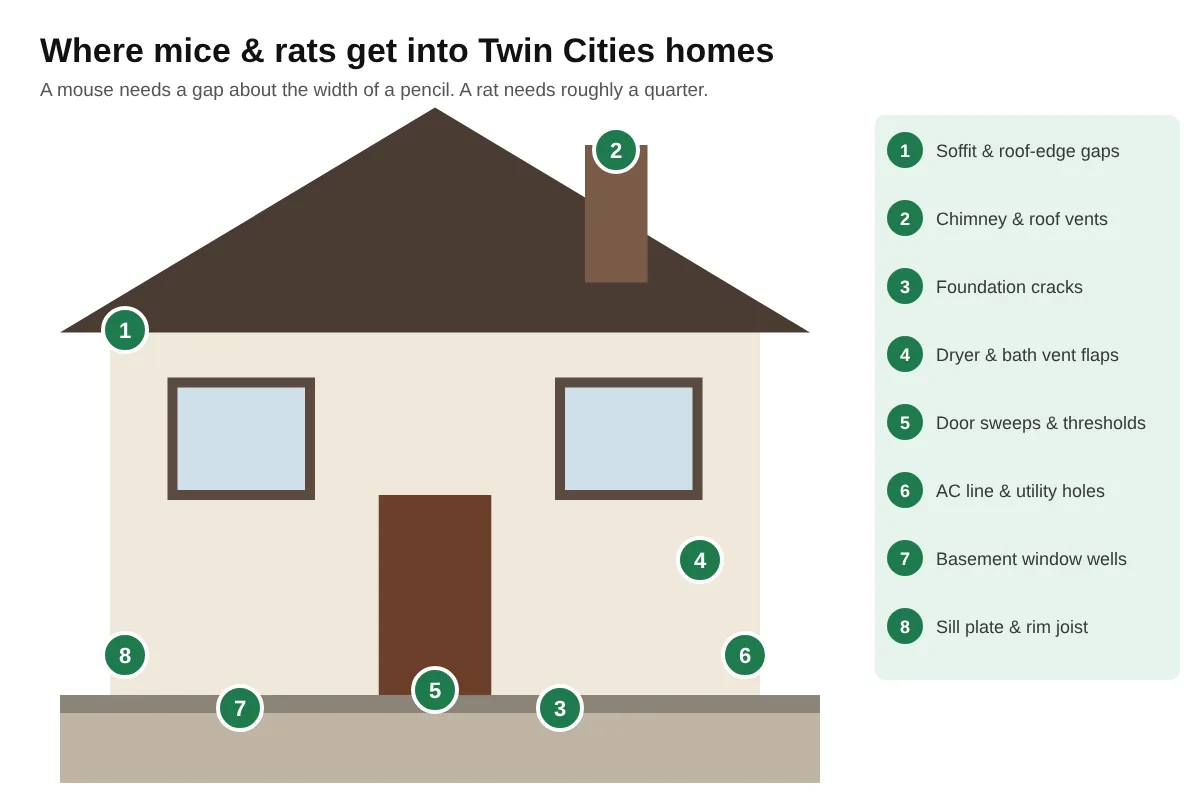
In St. Louis Park, the most common spots to seal are:
- Tuck-under and detached garage door gaps
- Sill plate gaps in post-war foundations
- Utility penetrations in basements
- Gaps around kitchen and bath exhaust vents
- Openings in shared walls and pipe chases (multi-unit)
- Window wells without covers
See how sealing works on our rodent exclusion page.
Neighborhoods in and Around St. Louis Park
Calls come in from every part of St. Louis Park, including:
Minnehaha Creek corridor
Homes along the creek where outdoor rodent pressure is highest.
Lenox, Fern Hill & Brookside
Established neighborhoods with post-war homes and mature trees.
Excelsior & Grand area
Mixed-use buildings, condos and restaurants that need building-wide plans.
West End & Highway 394 area
Apartments, offices and retail near the highway corridor.
Your call connects you with an independent local pest control provider.
Rodent Control St. Louis Park: Older Homes, New Buildings, Different Problems
St. Louis Park grew quickly after World War II, and neighborhoods like Lenox, Fern Hill, Brookside and Sorensen are full of compact 1940s and 1950s homes. Minnehaha Creek winds through the city, and parks such as Westwood Hills Nature Center and Bass Lake Preserve keep plenty of wildlife close to backyards.
At the same time, the city has added thousands of apartments and condos around the West End, Excelsior & Grand and the new light-rail corridor. Rodents treat these two kinds of buildings very differently, and a good plan should too.
Post-war houses
Expect mice to use the garage, the sill plate and gaps where utilities were upgraded over the years. Basement window wells and old milk-door openings are worth a close look.
Condos and apartments
In multi-unit buildings, mice travel through pipe chases, trash rooms and shared walls. Treating a single unit rarely works; the building manager, the trash room and the parking garage need to be part of the plan.
Restaurants and retail
Food businesses along Excelsior Boulevard and in the West End need sealed back doors, tidy dumpster pads and documented service visits to stay ahead of inspections.
Quick wins for St. Louis Park homes
- Seal around new utility lines and cable entries
- Fit a door sweep on the garage-to-house door
- Move pet food and birdseed into sealed bins
- Report trash-room problems to building management in writing
- Check window wells after heavy rain or snowmelt
The Minneapolis Health Department’s mouse fact sheet offers more prevention tips that apply across Hennepin County.
Common Rodent Situations in St. Louis Park and How They Are Handled
The city’s mix of compact post-war homes and new multifamily buildings creates very different rodent situations.
Mice in a 1950s rambler near Minnehaha Creek
Activity starts in the garage and moves into the basement laundry room. Sealing the garage door corners, dryer vent and utility penetrations, along with trapping indoors, usually ends it within a few weeks.
A condo near Excelsior & Grand
A resident sees droppings under the sink. Because units share pipe chases, the property manager schedules inspections of nearby units, the trash room and the parking garage, and entry points are sealed building-wide.
A bungalow with an old milk door
An unused milk-delivery door and loose basement window wells give mice easy access. Both are sealed with metal and hardware cloth, and window well covers are added.
A café in the West End
Exterior dumpster areas and a propped-open back door invite rodents. A monitoring program, door sweeps and dumpster pad cleanup keep the kitchen inspection-ready.
A St. Louis Park Rodent Calendar
Fall
Mice move from parks and creek edges into garages. Seal before the first hard frost.
Winter
Shared buildings see mice traveling between units. Report sightings to management quickly.
Spring
Construction and landscaping disturb nests. Watch for new activity near work sites.
Summer
Keep garbage and recycling carts closed and clean around grills and decks.
Rodent Control St. Louis Park: Quick Answers to Local Questions
Who handles mice in a condo or apartment?
In most buildings, the property owner or association arranges rodent control, because mice travel through shared walls, pipe chases and trash rooms. Report sightings in writing so the building can schedule a coordinated inspection.
Is rodent control St. Louis Park homes need mostly about the garage?
Often, yes. Attached and detached garages in post-war neighborhoods are a common first stop for mice. Door seals, corner gaps and stored items are usually the first things a provider checks.
Do creek-side homes see more rats?
Homes near Minnehaha Creek and park edges can see more outdoor rodent activity. Keeping compost, birdseed and pet food sealed and checking foundations for burrows helps.
How can I tell if the problem is getting worse?
More droppings, new gnaw marks, noises in daytime or sightings in new rooms all suggest a growing population. That is the point to move from DIY traps to a professional plan.
St. Louis Park Housing Types and Their Rodent Weak Spots
St. Louis Park has both classic post-war houses and brand-new multifamily buildings. Here is where each type usually lets rodents in.
| Property type | Where rodents get in | What usually fixes it |
|---|---|---|
| 1940s–50s bungalow or rambler | Garage corners, sill plate, old milk doors, basement window wells | Door seals, sill sealing, metal plates over old openings, well covers |
| Duplex or fourplex | Shared basement, pipe chases, trash area, rear entries | Building-wide inspection, sealed chases, enclosed trash storage |
| New condo or apartment building | Trash rooms, parking garage doors, utility rooms, shared walls | Door sweeps, sealed utility penetrations, coordinated unit inspections |
| Restaurant or retail space | Back doors, dumpster pads, deliveries, ceiling voids | Door sweeps, sanitation schedule, monitoring and service logs |
St. Louis Park Rodent Problems in Pictures
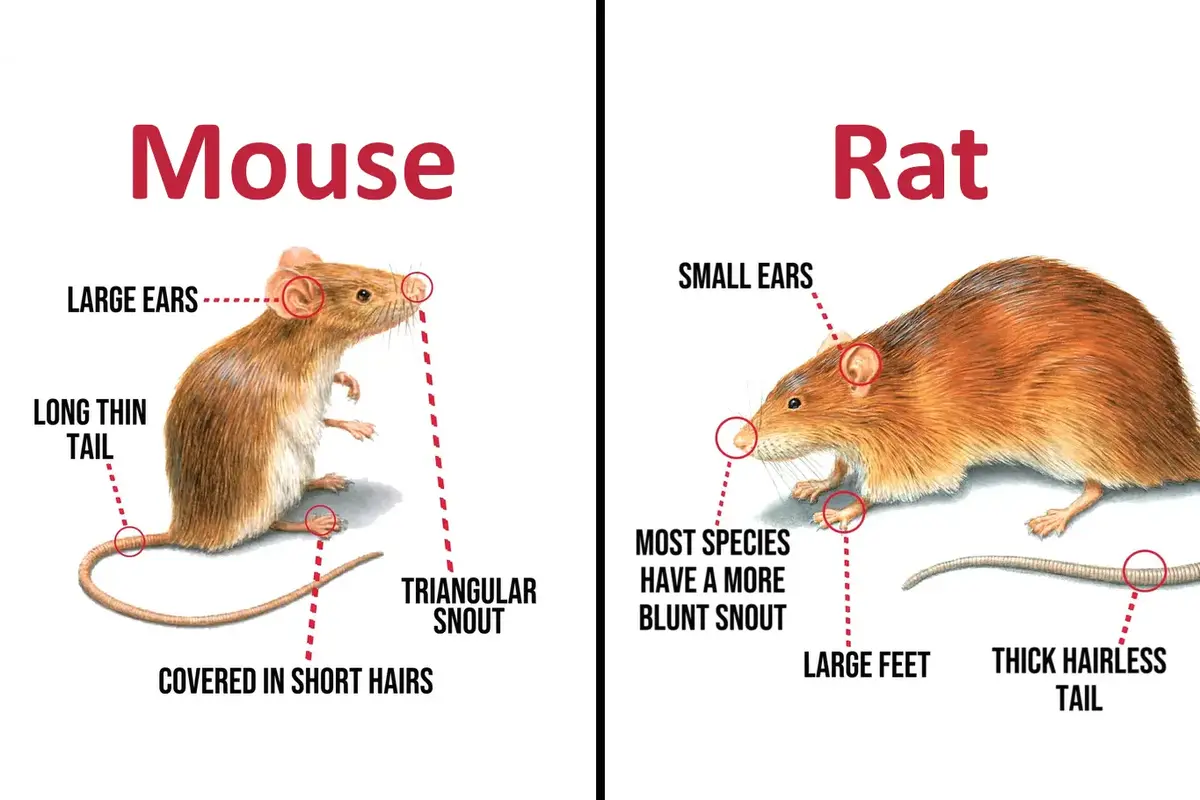
A picture is often faster than a description. These illustrations cover the most common things St. Louis Park homeowners and condo residents report: entry points around the foundation and garage, the difference between mice and rats, and the full removal process. Use them as a checklist when you walk your own property or talk with your building manager.
Rodent Control in St. Louis Park: Common Questions
Do you work in condo and apartment buildings?
Yes. Providers work with individual owners and building managers and can coordinate with your HOA or management company.
Why do homes near Minnehaha Creek see more rodents?
The creek provides water, food and cover, which supports more rodents outdoors. Homes close to it see more pressure when the weather turns.
Can you seal a tuck-under garage?
Yes. Tuck-under garages have unique gaps where the garage meets the house, and those can be sealed with metal and sealant.
How soon can someone come out in St. Louis Park?
It depends on the provider’s schedule and your location. Ask about availability when you call.
Your call connects you with an independent local pest control provider.