
Dead Rodent Removal in Minneapolis — Find the Source and Get Rid of the Smell
Dead rodent removal Minneapolis homeowners ask about usually starts with a smell that won’t go away. That sweet, rotten smell that seems to come from nowhere is hard to live with. A local provider can locate the dead mouse or rat, remove it, and treat the area so the odor is actually gone, not just covered up.
Your call connects you with an independent local pest control provider.
- Talk to a Real Person
- Independent Local Providers
- Minneapolis & Nearby Suburbs
- Ask for a Written Plan
Why Rodents Die Where You Can’t Reach Them
Mice and rats die indoors for a few reasons: old age, cold, illness or, very often, poison that someone put out earlier. A rodent that isn’t feeling well heads for a dark, enclosed place, which usually means inside a wall, under a floor, behind a cabinet or in a heating duct.
As the body breaks down, it gives off gases with a strong, sickly-sweet odor. In a warm house the smell can peak within a few days and linger for two to four weeks. It can also attract flies, which are sometimes the first clue people notice.
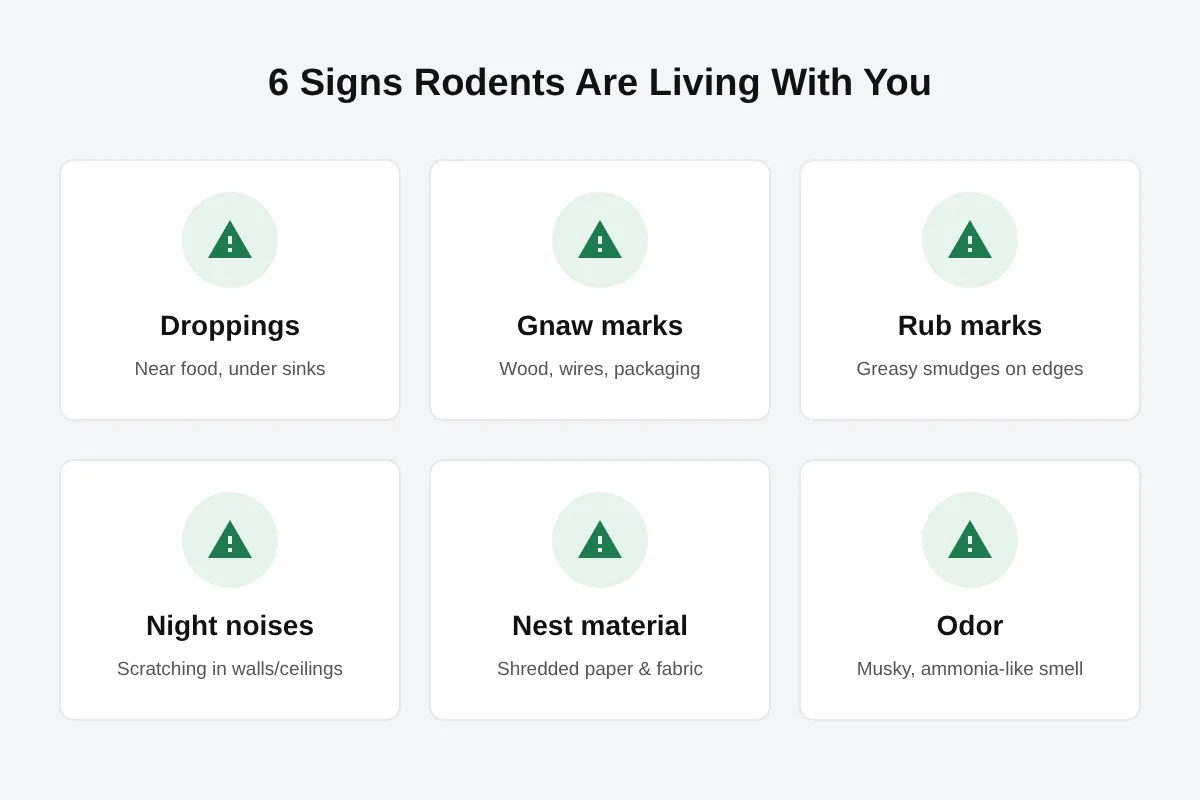
How a Dead Rodent Is Found
Odor travels through walls and ductwork, so the spot where it smells strongest isn’t always where the animal is. Providers narrow it down using a few clues together:
- Where the smell is strongest and how it changes through the day
- Flies or fly pupae gathering near a baseboard or vent
- Stains on ceilings or drywall
- Known rodent paths and recent trapping or baiting
- Moisture meters and inspection cameras for hidden spaces
Removal with as little damage as possible
Many dead rodents can be reached through vents, access panels, behind appliances or from the attic or basement. When a wall truly has to be opened, the access hole is kept small and placed where it’s easy to patch.
Odor Treatment and Sanitizing
Removing the body is only half the job. Fluids and bacteria stay behind, and that’s what keeps the smell around. After removal, a thorough job includes:
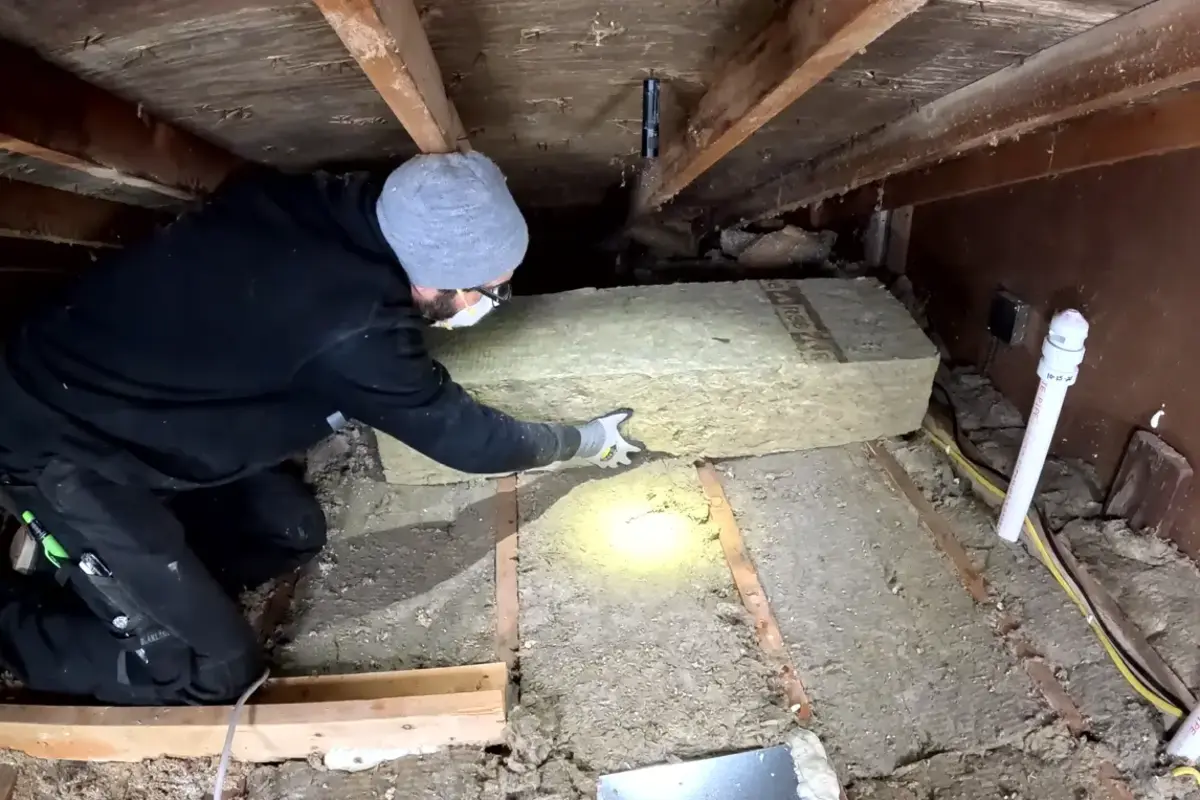
- Remove contaminated insulation or debris around the spot
- Apply an enzyme-based cleaner that breaks down organic material
- Treat the area with a disinfectant
- Use odor neutralizers, not perfumes that just mask it
- Recommend steps to find and seal how the rodent got in
A dead rodent is a sign there were live ones. If you’re not sure whether others are still in the house, ask the provider about mouse exterminator and exclusion too.
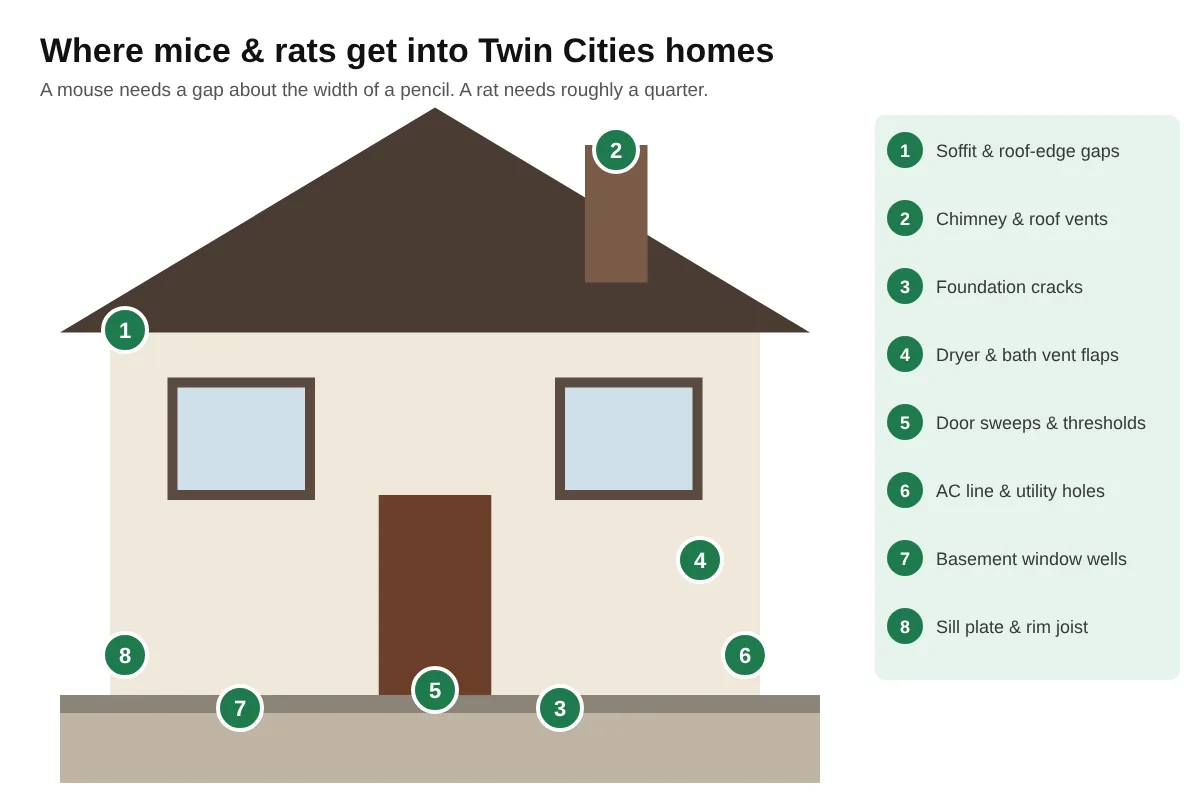
Common Places Dead Rodents Turn Up
Inside exterior walls
Especially near the floor on the first level, close to where the rodent first entered.
Attic insulation
Often near the edges of the attic, close to the eaves.
Behind appliances
Under the dishwasher, behind the fridge or inside the stove drawer area.
Heating ducts & returns
Odor spreads through the whole house when the furnace runs.
Under floors & crawl spaces
Common in older homes and additions with crawl spaces.
Garage walls & ceilings
Especially where garages share a wall with the house.
If the smell gets stronger when your furnace kicks on, the source may be in or near the ductwork. Mention that when you call. It helps narrow the search.
Your call connects you with an independent local pest control provider.
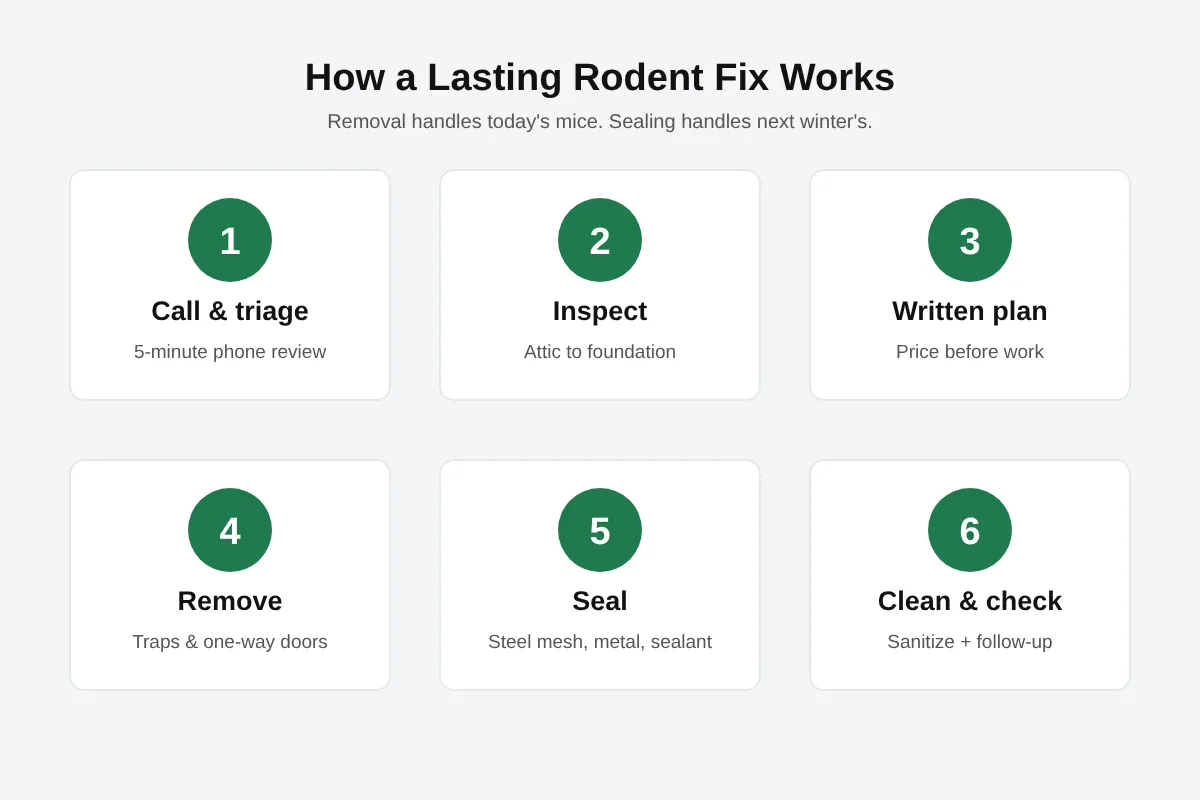
How Dead Rodent Removal Usually Works
Describe the smell
Where, how strong and how long it’s been there.
Pinpoint
Odor, flies, stains and camera checks to find the spot.
Access plan
The provider explains how they’ll reach it and what it costs.
Remove
The carcass and any nesting material are bagged and removed.
Treat
Enzyme cleaner, disinfectant and odor neutralizer.
Prevent
Entry points found and sealing options offered.
Dead Rodent Removal Minneapolis: How Long the Smell Lasts and Why
The odor from a dead mouse or rat depends on size, temperature and airflow. A mouse in a cool basement wall may fade in one to two weeks; a rat in a warm ceiling or near a furnace duct can smell for three weeks or longer and attract flies. In Minnesota winters, forced-air heat often spreads the odor through ductwork, making the source hard to pinpoint.
Why poison makes this worse
Rodents that eat bait don’t die on the spot. They often crawl back to the nest inside a wall, under a floor or in an attic, which is exactly why indoor poison leads to odor calls. Trapping indoors avoids most of these problems.
Finding the source
Providers follow the odor gradient, flies, stains on drywall or ceilings, and known rodent runways. Inspection cameras and small, carefully placed access holes keep repairs to a minimum.
After removal
The area is sanitized with an appropriate disinfectant, contaminated insulation or debris is bagged, and an odor neutralizer is applied. Then the entry point that let the rodent in should be sealed, or the problem repeats.
When handling a dead rodent yourself, wear gloves, spray it and the area with disinfectant, and bag it twice, following the CDC hantavirus prevention guidance.
Where dead rodents turn up
- Inside exterior walls near the floor
- Under bathtubs and kitchen cabinets
- In heating ducts and return vents
- In attic insulation above warm rooms
- Behind the dishwasher or refrigerator
Dead Rodent Removal Minneapolis: More Questions Answered
Can I just wait for the smell to go away?
Sometimes, if it is a single mouse in a cool area. But odor can last weeks, attract flies and stain drywall, and the entry point that let the rodent in is still open. Finding and removing the source is usually the faster, cleaner fix.
Is the smell harmful?
The odor itself is unpleasant rather than dangerous for most people, but decomposing rodents can attract insects and leave contamination behind. Removal and sanitizing take care of both.
How is the exact spot found without tearing up walls?
Providers narrow it down by following the strongest odor, looking for flies or stains, and checking known rodent runways. Inspection cameras and small access holes keep repairs minimal.
What if the smell is coming from a vent?
Rodents sometimes die in ductwork or near a return vent, and forced-air systems spread the smell through the house. The ducts can be inspected and the animal removed through the nearest access point.
Will this happen again?
If live rodents are still getting in, yes. That is why removal is followed by an inspection for entry points and, where needed, sealing.
Dead Rodent Problems in Pictures
These illustrations show where rodents usually travel and die inside a house, the signs that point to the source, and the steps used to remove it and prevent the next one. Compare them with where the odor seems strongest in your home.
Dead Rodent Removal: Common Questions
How long will the dead mouse smell last if I leave it?
Usually two to four weeks for a mouse and longer for a rat, depending on temperature and airflow. Flies and stains can follow.
Can I just use air fresheners?
They cover the smell for a short time but don’t remove the source. Bacteria and fluids remain until the area is cleaned and treated.
Is the smell harmful?
The smell itself isn’t usually dangerous, but it can cause headaches or nausea for some people, and a decaying rodent carries bacteria and attracts insects.
Why did a rodent die in my wall?
Old poison bait is a common cause. That’s one reason poison inside homes should be avoided.
Can I find the dead mouse myself?
Sometimes. Check behind appliances, under sinks and in the basement first. If the smell is in a wall or ceiling, a professional can usually find it with less damage than guessing.
Related Rodent Services in Minneapolis
Mouse Exterminator
Rat Removal
Urgent Rodent Removal
Mice & Rats in Walls
Attic Rodent Removal
Rodent Exclusion
Commercial & Rental Properties
Questions to Ask Before You Hire
- Can I see your Minnesota pest control license number?
- Will you give me a written quote before starting?
- What exactly does the treatment or exclusion include?
- Do you offer any warranty or follow-up visits, and what are the terms?
- How do you handle cleanup and dead rodent removal?
Your call connects you with an independent local pest control provider.