
Rat Exterminator in Minneapolis, MN — Norway Rat Removal for Homes, Garages and Yards
A good rat exterminator Minneapolis property owners can rely on starts outside, where Norway rats live. Rats are bigger, bolder and harder to outsmart than mice. If you’ve spotted one near the garbage carts or found burrows along the foundation, it’s time for a plan that removes the colony and protects the house.
Your call connects you with an independent local pest control provider.
- Talk to a Real Person
- Independent Local Providers
- Minneapolis & Nearby Suburbs
- Ask for a Written Plan
Rats in Minneapolis: More Common Than People Think
The rat you’re dealing with here is almost always the Norway rat, sometimes called the brown rat or sewer rat. It’s a heavy, burrowing rodent that lives close to people, and the Twin Cities give it plenty of what it needs: alleys with garbage carts, compost bins, bird feeders, creeks and the Mississippi River corridor.
Norway rats dig. They build burrow systems under decks, sheds, concrete slabs and along foundations, and they handle Minnesota winters by staying underground or moving into basements and garages when the ground freezes hard.
City construction, sewer work and new development can push colonies into new neighborhoods overnight. Plenty of people who have lived in the same house for twenty years see their first rat after a nearby project disturbs the ground.
Signs of Norway Rats Around Your Property
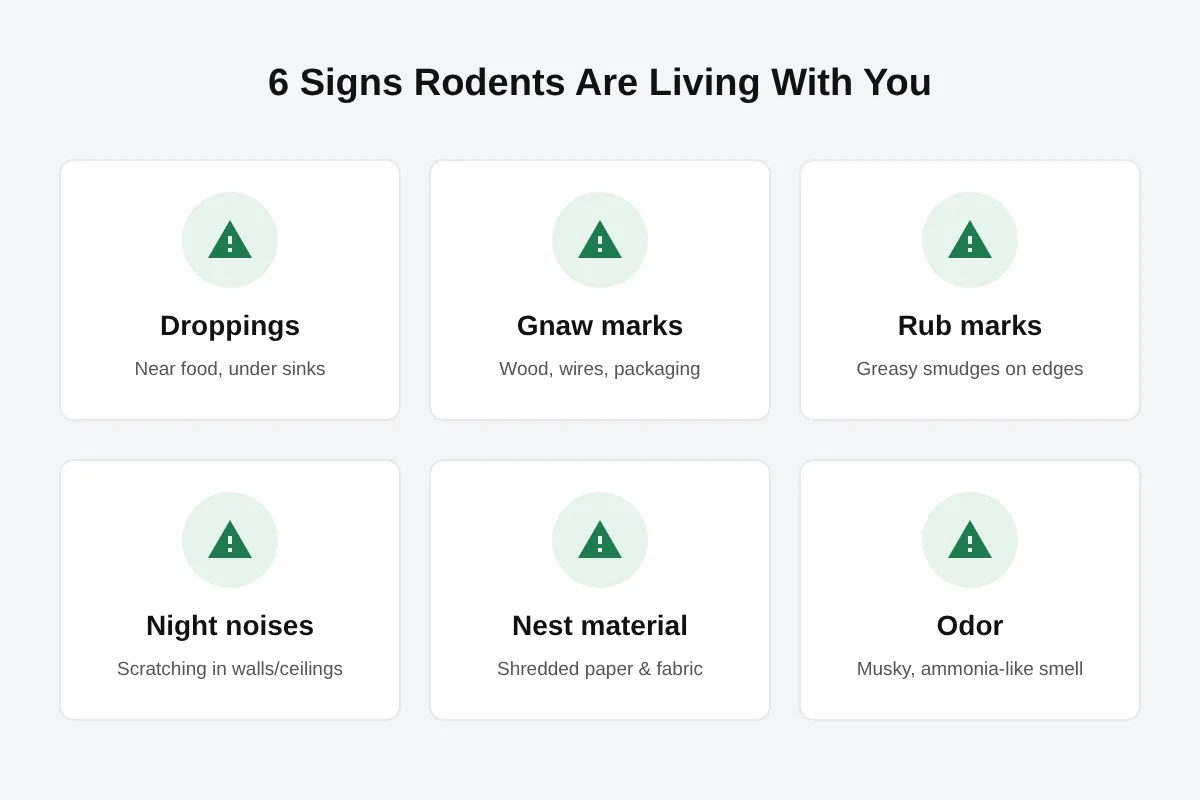
- Burrow holes 2 to 4 inches wide along the foundation, under decks or beneath shrubs
- Droppings the size of an olive pit, often in groups
- Dark greasy rub marks along walls, beams and the edges of holes
- Gnawing on garage doors, wooden steps or plastic garbage carts
- Heavy thumping or dragging sounds in the basement ceiling or crawl space
- Food or pet food disappearing from garages and porches
Why rats are harder to catch than mice
Rats are suspicious of new things in their territory. Set a trap in the wrong place or too quickly, and the colony learns to avoid it. That caution is why professional rat control often includes pre-baiting, leaving traps unset for a few days so rats get used to them before they’re armed.
Where Rats Are Getting In
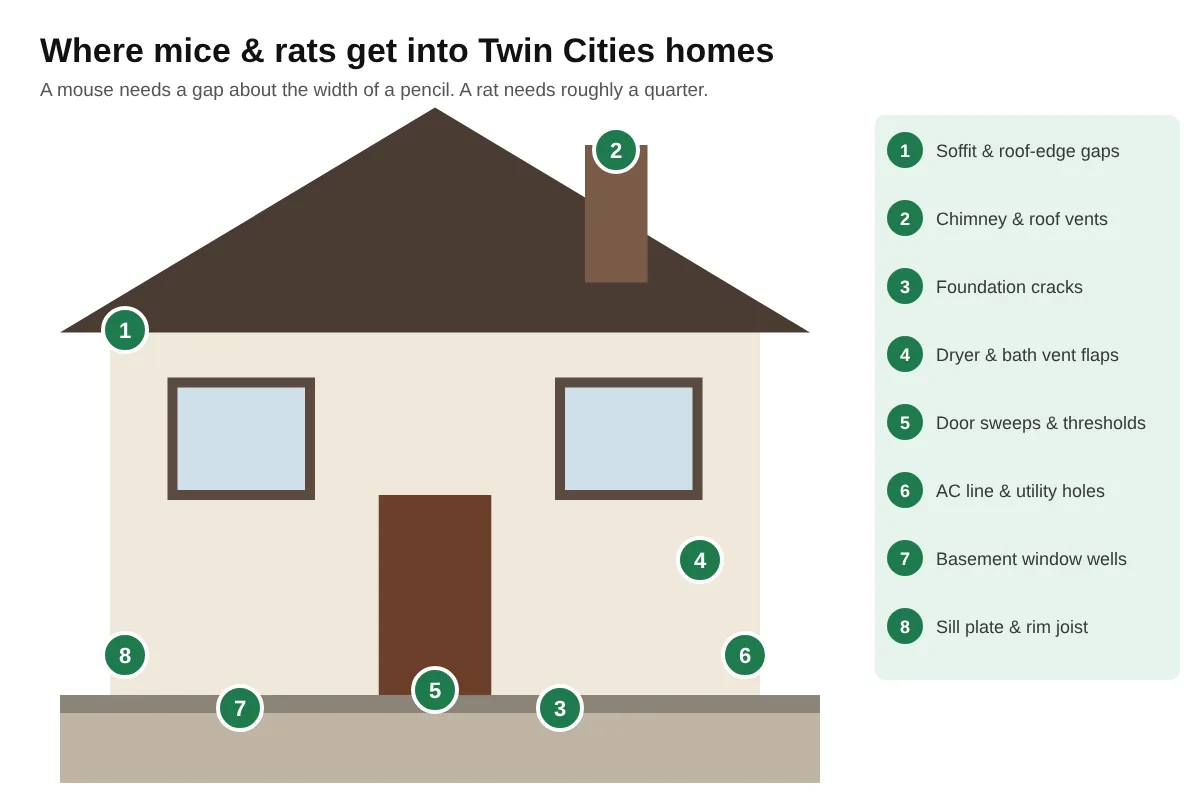
Rats need a bigger opening than mice, around half an inch, but they’re strong enough to widen gaps by chewing. In Minneapolis, the most common rat entry points are:
- Gaps under garage doors and around the side door frame
- Cracked or settled concrete slabs in garages and basements
- Old floor drains and loose sewer clean-out caps
- Openings where utility lines enter below grade
- Gaps under decks and porches connected to the house
- Damaged foundation vents and crawl-space access doors
Because rats burrow, sealing has to go below the surface too. Buried hardware cloth, also called an L-footing, stops rats from digging under a slab or deck and back into the house.
Why Poison Alone Doesn’t Solve a Rat Problem
Poison is the first thing many people reach for, and it’s usually the wrong tool by itself. A rat that eats bait can take days to die and often does it inside a wall, under a floor or somewhere you can’t reach. The smell that follows can last for weeks. Pets, owls, hawks and neighborhood cats can also be harmed by eating a poisoned rat.
Bait belongs only in locked, tamper-resistant stations outdoors, and only when the situation calls for it. Inside the home, trapping and sealing are the safer approach. If a rat has already died somewhere inside, a dead rodent removal provider can find it and treat the odor.
Your call connects you with an independent local pest control provider.
Where Rats Show Up Around the Twin Cities
Rats concentrate where food, water and cover come together. In Minneapolis that often means alleys with overflowing carts, neighborhoods near the Mississippi and its creeks, blocks with lots of backyard chickens or compost, and commercial strips with restaurants. Spring snowmelt floods low burrows and pushes rats toward higher ground, which is usually your foundation, garage or deck.
Alleys & garages
Detached garages with dirt floors or cracked slabs are prime rat housing. Slab edges, door corners and anything stored on the floor deserve a close look.
Gardens, coops & compost
Open compost, dropped birdseed and chicken feed are reliable rat food. Simple changes in storage can cut activity dramatically.
Decks & porches
Rats love the protected, dry space under decks. Burrows there often lead right to the foundation.
Neighbors matter too. Rats don’t respect property lines, so if your block has a problem, it helps to talk with neighbors about garbage, compost and pet food. A provider can treat your property and recommend steps you can share with neighbors.
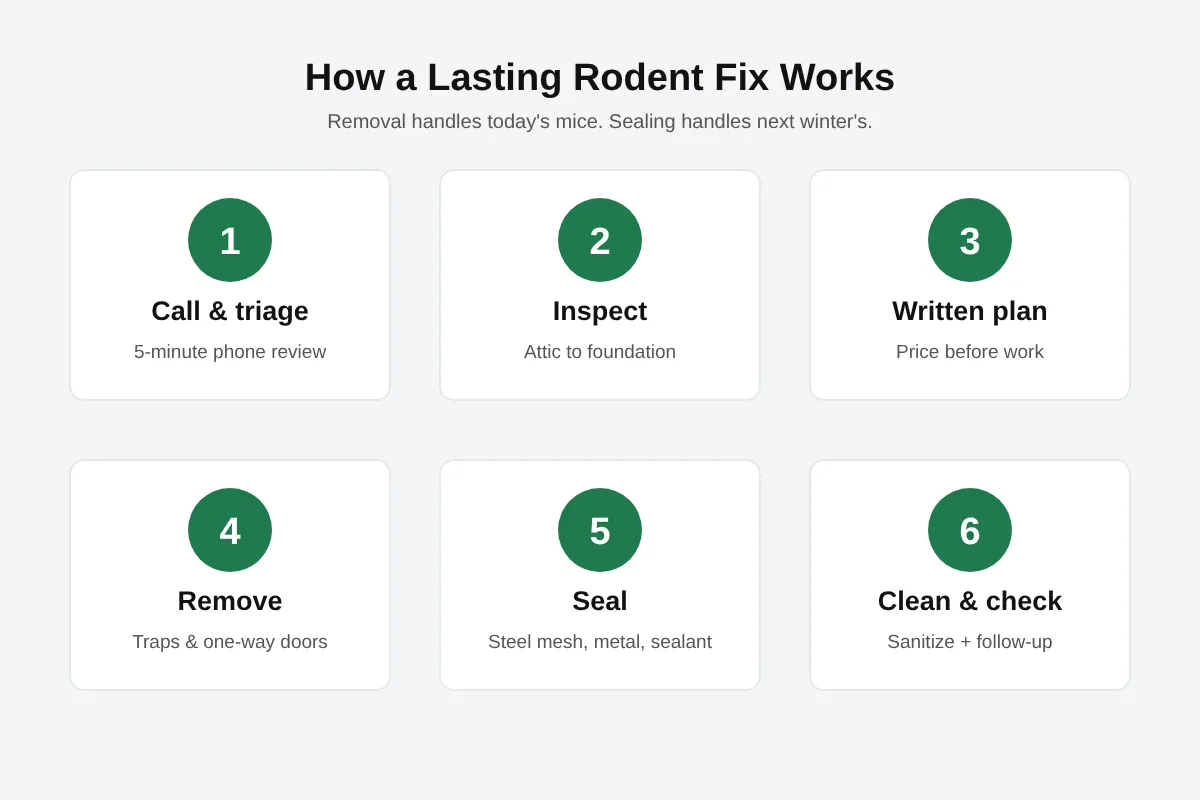
How Rat Removal Usually Works in Minneapolis
Phone review
The provider confirms it’s rats and judges how urgent it is.
Property inspection
Burrows, runways, entry points and food sources, inside and out.
Written plan
What will be done, how long it takes and what it costs.
Removal
Pre-baited traps and exterior stations matched to the colony size.
Seal & protect
Entry points closed, burrows collapsed, L-footings where needed.
Clean & confirm
Sanitizing and follow-up checks until activity stops.
How a Rat Exterminator Minneapolis Property Owners Hire Should Work
The Norway rat (Rattus norvegicus) is the rat species Minnesota property owners deal with. It is a ground-dweller and a strong digger, building burrows along foundations, under slabs, beneath sheds and decks, and in overgrown alley edges. Rats are cautious around new objects and travel the same routes nightly, which shapes how a professional plan is built.
Step one: map the burrows and runways
Fresh burrow openings are usually 2 to 4 inches across with smooth, packed edges. Runways through grass, gnaw marks on garage door corners and grease marks along foundations show where rats are traveling and where the colony is centered.
Step two: reduce food and shelter
Rats need water, food and cover. Closing garbage carts, removing fallen birdseed and fruit, and clearing junk piles are as important as any trap or bait.
Step three: remove and seal
Traps go along runways and inside garages; locked bait stations may be placed outdoors where they are safe for pets and children. Once activity drops, burrows are collapsed and foundations, garage slabs and utility gaps are sealed with hardware cloth, concrete patch and metal.
If rats are coming from a neighboring property or public land, Minneapolis 311 can route the concern to a city inspector. The Minneapolis Health Department’s mouse fact sheet lists related prevention steps.
Signs it’s rats, not mice
- Droppings about 3/4 inch long, often in groups
- Burrows along foundations or under slabs
- Gnaw marks on wood or plastic bins
- Heavier thumping sounds low in the house
- Pet food bowls emptied overnight
Norway Rat Problems in Pictures
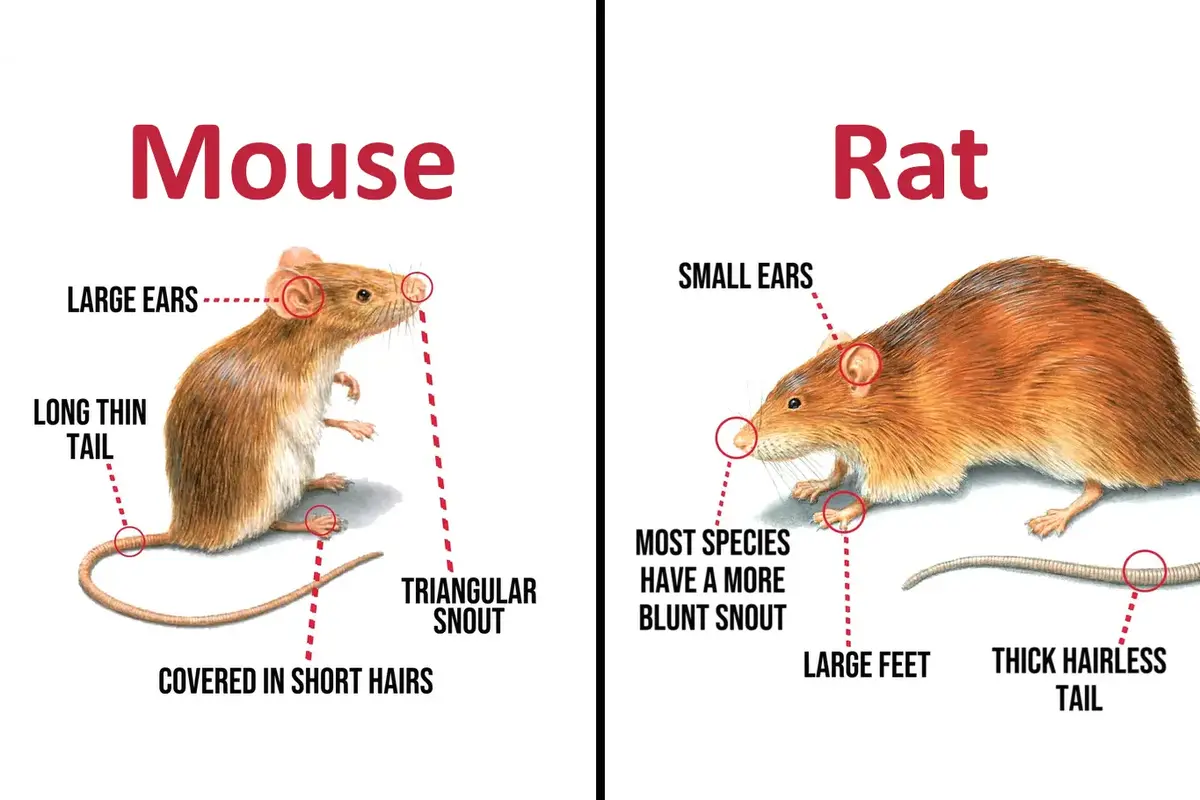
Rats leave different clues than mice. These illustrations show how to tell the two apart, where Norway rats usually get into Minneapolis homes and garages, and the steps a rat exterminator follows to remove them and close off the colony’s access. Use them to compare with what you find around your foundation, garage slab and alley.
Rat Removal: Common Questions
How do I know if it’s a rat and not a big mouse?
Look at the droppings and the damage. Rat droppings are much larger, about the size of an olive pit, and rats leave burrows outdoors. Mice rarely burrow.
Are rats dangerous?
They can be. Rats carry bacteria and parasites, contaminate food and can chew wiring. They also bite when cornered, so never try to grab or corner one.
Will the city of Minneapolis handle rats on my property?
Cities generally handle rats on public property and may enforce property maintenance rules, but rats on or under private property are usually the owner’s responsibility to resolve.
How long does rat removal take?
Expect two to four weeks for most homes. Rats are cautious, so the first few days are often spent getting them comfortable with traps before they’re set.
Can rats come up through the toilet?
It’s uncommon, but it can happen in older sewer systems. Damaged sewer lines and open floor drains are more common entry points, and both can be fixed.
Do rats come back after removal?
They can if food sources and entry points remain. Sealing the foundation, protecting slabs and decks with hardware cloth and removing food sources make a return much less likely.
Related Rodent Services in Minneapolis
Mouse Exterminator
Urgent Rodent Removal
Mice & Rats in Walls
Attic Rodent Removal
Dead Rodent Removal
Rodent Exclusion
Commercial & Rental Properties
Questions to Ask Before You Hire
- Can I see your Minnesota pest control license number?
- Will you give me a written quote before starting?
- What exactly does the treatment or exclusion include?
- Do you offer any warranty or follow-up visits, and what are the terms?
- How do you handle cleanup and dead rodent removal?
Your call connects you with an independent local pest control provider.