
How Rodent Control Works — Step by Step, From First Call to a Quiet House
Here is how it works when you are connected with a local rodent control provider through Norvane. Good rodent control follows a clear order. Here’s what typically happens after you call and get connected with a local provider, what you’ll see at each stage and why each step matters.
Your call connects you with an independent local pest control provider.
- Talk to a Real Person
- Independent Local Providers
- Minneapolis & Nearby Suburbs
- Ask for a Written Plan
Why the Order Matters
Most failed rodent jobs fail for the same reason: steps get skipped or done out of order. Seal a house before removing the mice inside, and they get trapped in the walls. Trap without sealing, and new mice replace the old ones within weeks. Clean up before removal is finished, and you’ll be cleaning again.
A good process puts each step where it belongs. It’s the same basic sequence for a one-bedroom condo or a large older home. Only the amount of work changes.
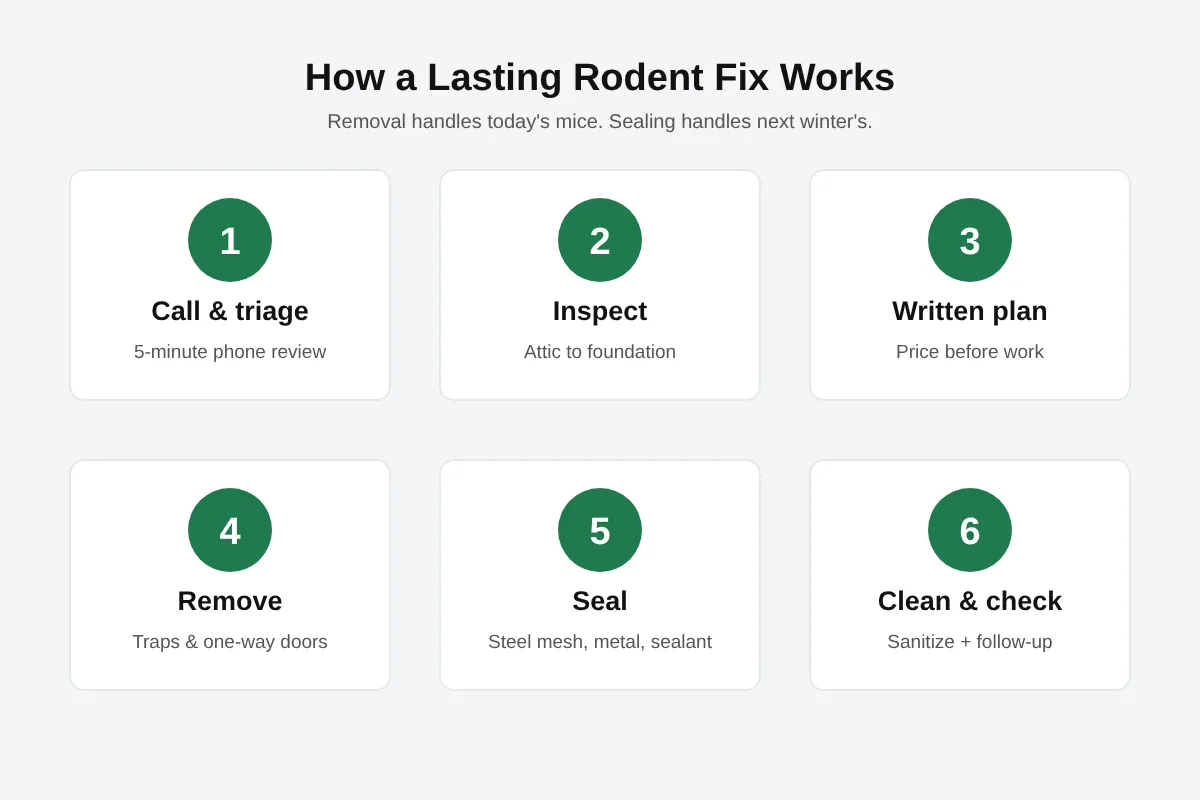
The 6 Steps in Detail
1. Phone Review (About 5 Minutes)
When you call, the provider will ask what you’ve seen, heard or smelled, where in the house it’s happening and how long it’s been going on. Those answers usually tell them whether it’s mice or rats, how established the problem is and whether it’s urgent. Then a visit time is set, based on the provider’s schedule.
- What you’ve noticed and where
- How long it’s been happening
- Pets, kids or health concerns to plan around
2. Full Inspection
The provider walks the entire property: attic, living areas, basement or crawl space, garage and the full exterior from the roof line to the foundation. They’re looking for droppings, rub marks, nests, burrows, chew damage and, most importantly, every gap a rodent could use.
- Photos of each entry point
- Notes on activity levels room by room
- Any damage to insulation, wiring or stored items
3. Written Plan and Price
You’ll get a clear plan that explains what was found, what needs to be done and what it costs. Removal, sealing and cleanup are listed separately so you can see exactly what you’re paying for. Nothing starts until you approve it.
- Findings and photos
- Itemized scope and price
- Expected timeline
4. Removal (Usually Days 1–3)
Traps are placed along active runways in protected stations, away from children and pets. For rats, traps are often pre-baited before being set so the colony gets used to them. One-way exit doors are used where the layout allows. Indoor poison is avoided.
- Professional traps in protected stations
- One-way exits where appropriate
- Exterior locked stations only if needed
5. Sealing (Usually Days 2–7)
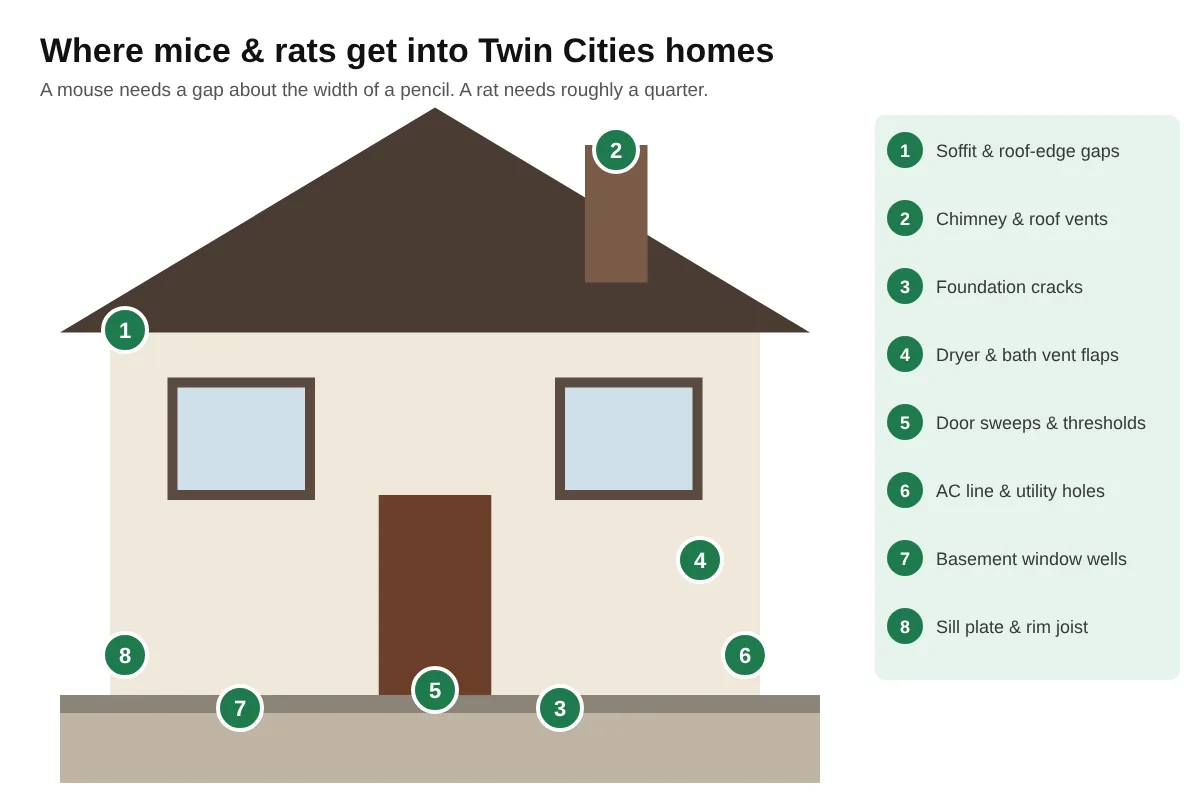
Once removal is under way, every entry point is sealed with the right material for that spot: stainless steel mesh, galvanized hardware cloth, sheet-metal flashing, concrete patch and cold-rated sealant. Foam alone isn’t used because rodents chew through it.
- Foundation, sill plate and utility gaps
- Vents, garage doors and roof line
- Burrow barriers for rats where needed
6. Cleanup and Final Check
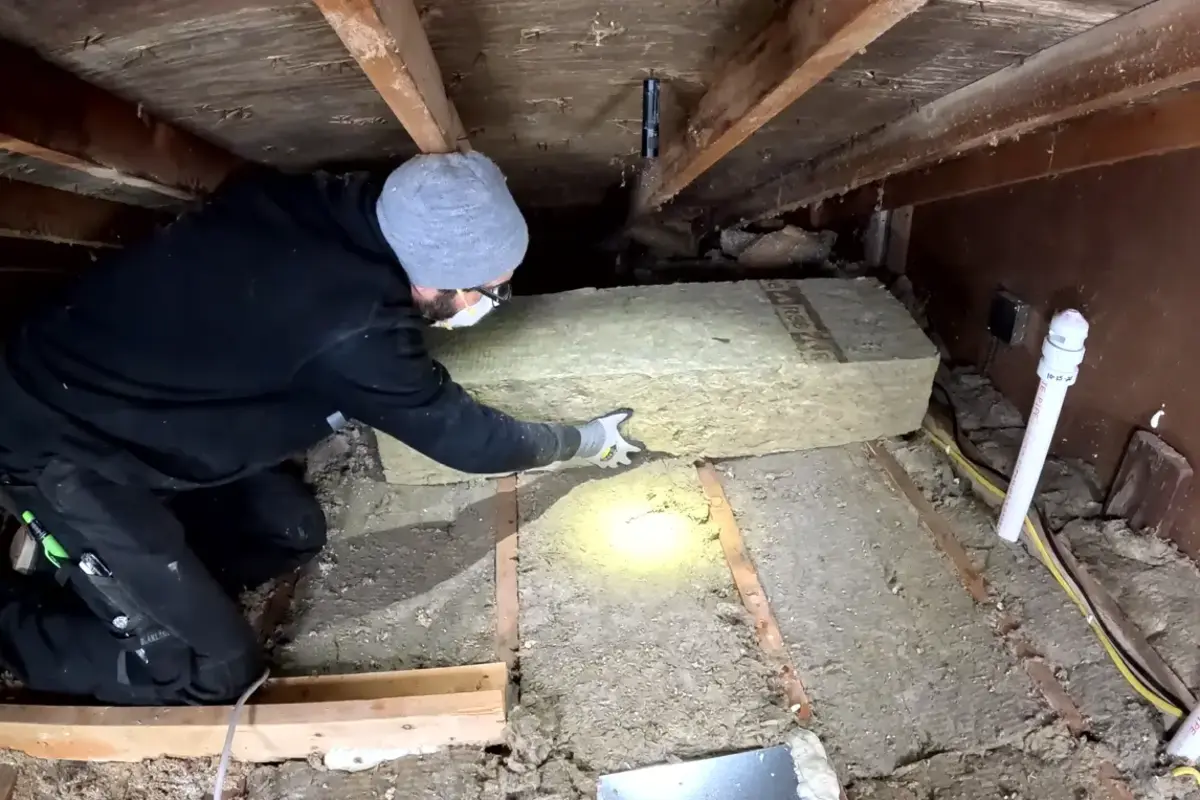
When activity stops, droppings and nesting material are removed and affected areas are sanitized. Heavier contamination, like attic insulation, can be removed and replaced. A final visit confirms the home is quiet and the seals are holding.
- Dropping and nest removal
- Sanitizing and deodorizing
- Final inspection and warranty details
How Long the Whole Process Takes
| Situation | Typical timeline |
|---|---|
| A few mice, newer home | 1–2 weeks |
| Established mouse problem | 2–3 weeks |
| Rats around the property | 2–4 weeks |
| Attic cleanup and insulation | Add 1–2 days after removal |
| Commercial building | Initial clean-out, then ongoing service |
Timelines depend on how many rodents are inside, how many entry points need sealing and how quickly the rodents take to traps. You’ll get an estimate in your written plan.
How It Works Behind the Scenes: Who Does What
Norvane is a referral service. Knowing who is responsible for each part of the process helps you set expectations and ask the right questions.
Our role
We publish clear information about rodent problems in Minneapolis and the Twin Cities and connect you with an independent local provider who serves your area. We do not send technicians, set prices or perform any work.
The provider’s role
The provider inspects your property, explains what they found, gives you a plan and price, and performs the removal, sealing and cleanup if you choose to hire them. Their schedules, warranties and terms are their own.
Your role
You decide whether to move forward. Between visits, simple steps make a real difference: keep food sealed, report new activity right away, avoid moving traps and keep pets away from any exterior stations.
How long it takes
Most homes go quiet within one to three weeks. Larger buildings, Norway rat colonies and attic insulation work can take longer. Businesses often move to an ongoing monitoring schedule.
For background on why sealing and sanitation matter so much, see the Minneapolis Health Department’s mouse fact sheet. You can also read our cost factors and FAQs.
How it works, in one line each
- Talk: describe what you have noticed
- Inspect: the whole building, inside and out
- Plan: findings and price in writing
- Remove: traps along real runways
- Seal: chew-proof, cold-rated materials
- Confirm: cleanup and a follow-up check
Your call connects you with an independent local pest control provider.
How It Works: A Typical Rodent Control Timeline
Every property is different, but most single-family homes in Minneapolis follow a timeline close to this one. Larger buildings and rat problems may take longer.
| Stage | Typical timing | What happens |
|---|---|---|
| First conversation | When you reach out | You describe the problem; a visit is scheduled. |
| Inspection | Within a few days, often sooner | The provider checks inside and out and documents findings. |
| Written plan | At or right after the inspection | You review the findings, scope and price before agreeing. |
| Removal | Days 1–14 | Traps are set along runways and checked on follow-up visits. |
| Exclusion | Days 3–14 | Entry points are sealed once activity is under control. |
| Cleanup and confirmation | Weeks 2–3 | Droppings and nesting material are cleaned up and a final check confirms it is quiet. |
How It Works: More Questions Answered
Do I have to be home for the inspection?
Usually someone needs to provide access to the attic, basement and garage. Exterior inspections and some follow-ups can happen while you are away if you agree in advance.
What if I don’t like the plan or price?
You can decline, ask questions or get another opinion. The referral does not obligate you to hire the provider.
How does the provider know it is really over?
Fresh droppings stop appearing, traps stay empty over several checks, and monitoring stations show no new activity. A final follow-up confirms it before the job is closed.
Will I need ongoing service?
Most homes don’t once exclusion is done. Businesses, rental buildings and properties near heavy outdoor rodent pressure often choose ongoing monitoring.
How It Works in Pictures
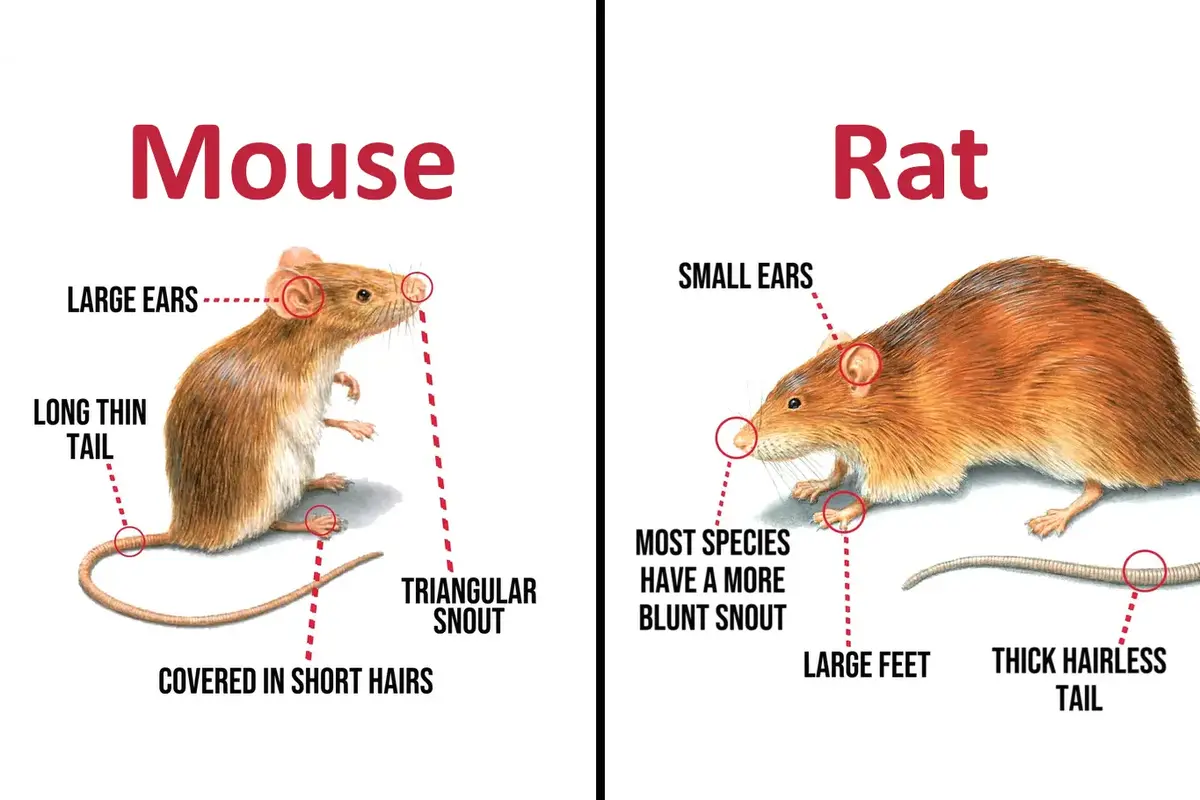
These illustrations walk through the key parts of the rodent control process: identifying the rodent, finding the entry points and cleaning up the areas where rodents nested. Together they show why each step matters.
What You Can Do Between Visits
The provider handles removal and sealing, but a few simple habits at home make the process faster and the results last longer.
Remove easy food
Move cereal, grains, pet food and birdseed into glass, metal or hard plastic containers. Wipe crumbs from counters and under appliances each night so traps become the most attractive option for any mice still inside.
Leave traps where they are
Traps are placed along the routes rodents actually use. Moving them, even a few feet, can cut their effectiveness. If a trap is in an inconvenient spot, ask the provider before moving it.
Report what you see
Note the date, time and location of any new droppings, noises or sightings. Those details tell the provider whether activity is dropping and where to focus on the next visit.
Keep pets and kids safe
Keep children and pets away from traps and any exterior stations. Ask the provider which devices are tamper-resistant and where they have been placed.
Questions About the Process
Do I need to be home for every visit?
Someone needs to be home for the inspection and any interior work. Exterior sealing and some follow-ups can often be done while you’re out.
Should poison be used in my house?
It’s better not to. It often causes rodents to die inside walls, and it can be dangerous for pets and children.
What happens if mice come back after sealing?
Many providers stand behind their sealing work, but terms vary, so ask for any warranty in writing. If activity returns, the provider should come back to find and close the new opening.
Can I skip the sealing and just do trapping?
You can, but it’s usually a short-term fix. Without sealing, new rodents tend to move in, especially each fall.
Your call connects you with an independent local pest control provider.